Red Light Therapy for Face vs Body: Which Device Do You Need?
Spread the love
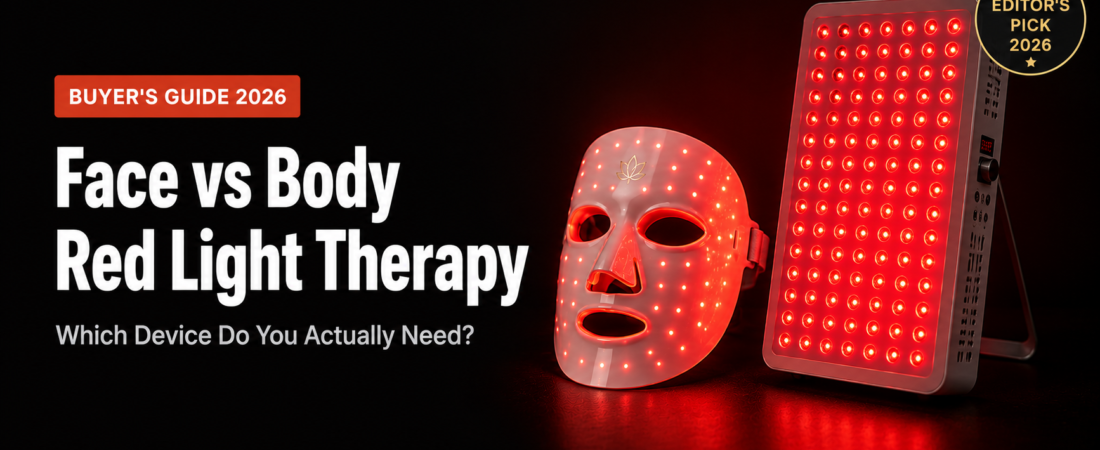
The most common question we get from people who’ve decided to try red light therapy isn’t about wavelengths or irradiance. It’s simpler than that: Should I get a face device or a body device?
It sounds like a basic question. The answer is surprisingly nuanced — because “face device” and “body device” aren’t fixed categories. They’re shorthand for fundamentally different approaches to red light therapy: one optimized for close-contact, targeted skin treatment; the other for systemic coverage, deeper tissue penetration, and a wider range of health benefits.
This guide walks through the real differences between the two, who each is right for, whether you can use one device for both, and what to buy depending on your specific goals.
Table of Contents
Face Devices vs Body Devices: What’s Actually Different?
At the physics level, both face and body devices use the same technology: LEDs emitting light at specific red and near-infrared wavelengths that your cells absorb and use to produce more energy. The biology is identical. The difference is in how those photons are delivered to your tissue — and how much of your body gets treated at once.
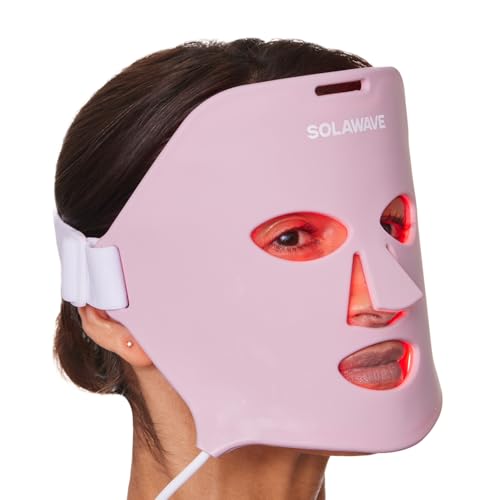
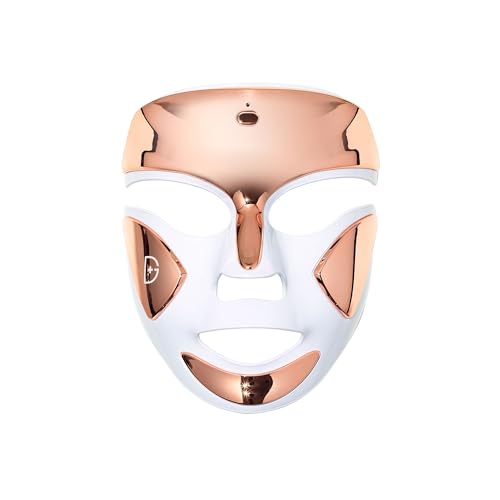
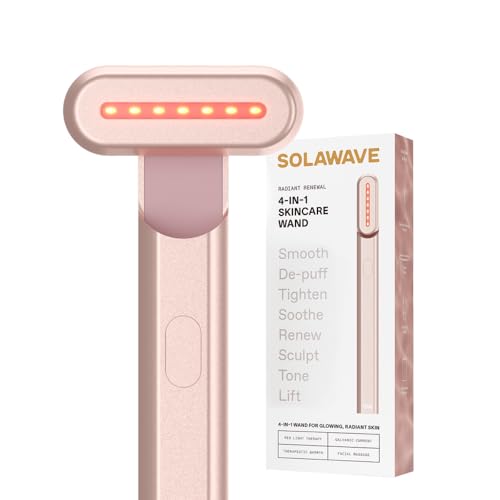
Face devices — LED masks, handheld wands, and small targeted panels — are designed around a single anatomical target: your face. They deliver light at close range, typically with the device in direct contact with or millimeters from your skin. This proximity compensates for lower total power output and makes them highly efficient for facial treatment specifically.
Body devices — full panels, half-body panels, targeted wraps, and mats — are designed for larger surface areas. They stand at a distance (typically 6–12 inches from your body), which requires significantly higher irradiance to deliver therapeutic doses to the skin. They cover more area per session but aren’t engineered around facial contours.
The major differences are in size, power, coverage, and types of benefits. LED panel devices are much larger than LED masks, and they deliver wavelengths of red and NIR light across the entire body, not just the head and face.
LED face masks sit directly against the face, providing full-coverage light at effectively zero treatment distance. Because the LEDs are right on the skin, even modest irradiance can deliver a strong dose in just a few minutes.
How Each Type Works on Your Skin and Body
Both device types trigger the same cellular mechanism: light is absorbed by cytochrome c oxidase in the mitochondria, increasing ATP production, releasing nitric oxide, and stimulating cellular repair processes. But where each type excels depends on tissue depth and treatment area.
Red light (630–660nm) penetrates 1–3mm into the skin, primarily affecting the epidermis and superficial dermis. This is the workhorse wavelength for collagen stimulation, fine line reduction, skin texture improvement, and surface inflammation.
Near-infrared (810–850nm) penetrates 5–10mm — reaching the dermis, subcutaneous tissue, and in some cases muscle and joint tissue. This is the wavelength that makes body panels relevant for recovery, joint pain, and deeper structural skin concerns.
The practical implication: a face mask at 30 mW/cm² pressed against your skin delivers more usable energy to your facial dermis than a body panel at 100 mW/cm² positioned 12 inches away. Proximity wins for facial applications. Power wins for body applications.
Face Devices: What They’re Best For
Face devices are optimized for one thing: maximum light delivery to the complex contours of your face, consistently, with minimum friction. Their entire design — flexible silicone, adjustable straps, hands-free sessions — exists to solve the compliance problem: making it easy enough to do every day that you actually do.
Anti-Aging and Collagen Production
The strongest use case for face devices and the most thoroughly researched application in at-home red light therapy. Multiple controlled clinical trials show measurable improvement in fine lines, skin texture, collagen density, and skin roughness with consistent LED mask use over 8–12 weeks. The mechanism is direct: 630–660nm light stimulates fibroblasts — the cells that manufacture collagen — with measurable increases in collagen production observed within 24 hours of exposure.
Face masks are the most efficient format for this application. For facial skin goals, a high-quality LED mask can be just as effective — and sometimes more convenient — than using a panel, because it delivers light right against the skin across the entire face at once.
Acne Treatment
Blue light (415nm) has established antibacterial effects against the bacteria primarily responsible for inflammatory acne. Several FDA-cleared face masks combine red and blue LEDs for dual anti-aging and anti-acne protocols. This is uniquely a face-device application — you can’t practically target facial acne with a body panel.
Skin Tone, Redness, and Pigmentation
630–660nm red light reduces surface inflammation and supports more even skin tone over consistent use. Amber wavelengths (590–605nm), included in some premium masks like the Solawave Wrinkle Retreat Pro, target surface-level redness and radiance specifically. These are all facial applications best served by a device engineered for face-contact delivery.
Post-Procedure Recovery
Dermatologists increasingly use LED panels post-procedure after laser treatments, chemical peels, and microneedling to reduce inflammation and accelerate healing. At home, a face mask serves the same purpose: targeted post-procedure recovery for the exact area that was treated.
Body Devices (Panels and Wraps): What They’re Best For
Body devices — particularly full panels — are a fundamentally different category. When you apply the same therapeutic wavelengths of light to other parts of the body beyond the face, red light therapy can have a much greater effect, with few side effects or risks. The benefits extend well beyond skin.
Muscle Recovery and Athletic Performance
This is where body panels have no face-device equivalent. Near-infrared light at 810–850nm penetrates deep enough to reach muscle tissue, stimulating cellular repair, reducing creatine kinase (a biomarker of muscle damage), and measurably shortening recovery time between training sessions. Pooled randomized trial data shows red and NIR light reduces soreness in the days after hard training and speeds the return of strength. If athletic recovery is part of your goals, a face mask cannot address this — you need a panel or targeted wrap covering the relevant muscle groups.
Joint Pain and Inflammation
A Cochrane review found low-level light therapy reduced rheumatoid arthritis pain and cut morning stiffness significantly. Knee osteoarthritis shows meaningful relief with near-infrared specifically. For joint applications, the light needs to reach tissue 5–10mm below the surface — which requires the higher irradiance and NIR wavelengths that body panels deliver at their recommended treatment distances.
Full-Body Skin Health
LED panel light therapy offers better coverage, which means far more total energy transfer than masks in far less time. LED panel systems can produce many more health and wellness benefits across the body, while masks only affect the face. If your goals include overall skin quality across your torso, arms, or legs — not just your face — a panel is the only practical format.
Sleep and Systemic Wellness
Several studies suggest red and near-infrared light exposure supports melatonin production and circadian rhythm regulation when used in the evening. Users consistently report improved sleep onset and quality. This systemic benefit requires whole-body light exposure — a face mask alone is unlikely to produce the same effect.
Wound Healing
Red light therapy has been included in clinical guidelines for certain wound healing applications. For wounds or scars located on the body rather than the face, a panel or targeted wrap is the appropriate device format.
The Irradiance Gap: Face Masks vs Body Panels Compared
Face vs Body Red Light Therapy: Full Comparison
Side-by-side breakdown of what each device type delivers — and which one fits your goals.
Head-to-head spec comparison
Feature
😊 Face Device (Mask / Wand)
💪 Body Device (Panel / Wrap)
Primary Target
Face, neck, décolletage
Torso, limbs, joints, muscles
Coverage Area
Face only (~300 cm²)
Large body areas (1,000–10,000 cm²)
Treatment Distance
0mm (skin contact)
6–12 inches
Typical Irradiance
20–65 mW/cm²
50–200 mW/cm²
Session Length
3–10 min (hands-free)
10–20 min per area
Anti-Aging / Collagen
✓ Best format
Possible but less efficient
Acne Treatment
✓ With blue light LEDs
Not designed for this
Muscle Recovery
Not applicable
✓ Best format
Joint Pain Relief
Not applicable
✓ Best format
Sleep & Systemic
Limited (face only)
✓ Full body exposure
Portability
High — travel-friendly
Low — requires dedicated space
Setup Required
Instant — wear and go
Moderate — position and stand
Eye Safety
Built-in (eyes closed)
Goggles required for face use
Price Range
$150–$500
$200–$2,000+
Which device fits your goal?
😊 Get a Face Device if you want…
Facial anti-aging and collagen stimulation
Fine line and wrinkle reduction
Skin texture and radiance improvement
Acne treatment alongside aging
Post-procedure facial recovery
A hands-free, short-session routine
A portable, travel-friendly device
A lower entry price point (~$150+)
💪 Get a Body Device if you want…
Muscle recovery after training
Joint pain relief (knees, back, shoulders)
Whole-body skin health improvement
Sleep quality and systemic wellness
Wound healing on body areas
Treating multiple body zones per session
Household sharing across multiple users
Maximum NIR penetration to deep tissue
Our top verified picks — face & body
😊 Best Face Mask — Overall
HigherDOSE Red Light Face Mask
~$269
✅ FDA Cleared · FSA Eligible📡 Red + Near-Infrared⚡ Wireless · Hands-free · 10 min
Yes — with precautions. Many users position themselves in front of a body panel at the recommended 6–12 inch distance and treat their face alongside the rest of their body. LED panels are larger, more powerful devices that can treat broader areas like the face, neck, chest or even the body and can provide more robust collagen stimulation and deeper penetration.
The main considerations:
Eye protection is mandatory. A face mask is specifically tested for eye safety at its output level. A body panel at close range is not — always wear the goggles provided with your panel when treating your face.
Coverage is less precise. A panel doesn’t conform to your facial contours. Areas around the nose, chin, and eye sockets receive less light than a mask that directly contacts those areas.
It works, but it’s less efficient. For facial applications specifically, a mask will always be more convenient and deliver more consistent full-face coverage than positioning yourself in front of a panel. If you already own a panel and want to add facial treatment, it’s a reasonable option — but if your primary goal is facial anti-aging, a mask is the better tool.
Can You Use a Face Mask on Your Body?
Not meaningfully for body applications. Face masks are sized and shaped for the face — their coverage area is 15–20cm × 20–25cm at most. Using one on your knee, back, or shoulder would require long sessions of manual repositioning to cover a meaningful area. A panel is better for larger treatment areas such as the torso, back, legs, joints, and muscle groups. A mask is better for hands-free facial skincare because it is shaped around the face and maintains consistent distance from the skin.
Some targeted wraps and pads serve a similar function to face masks for specific body zones — a knee wrap for joint pain, a back pad for muscle recovery. But a face mask is not interchangeable with these.
Who Should Buy a Face Device
Buy a face mask or handheld wand if:
Your primary goal is facial anti-aging, collagen stimulation, or fine line reduction
You want to treat facial acne alongside aging (choose a mask with blue light)
You’re new to red light therapy and want to start with the most targeted, efficient tool for skincare
You value portability and travel-friendly design
You have limited space at home
You want a hands-free, short-session protocol that integrates easily into your skincare routine
Budget is a consideration — face masks start at ~$150 for viable options vs. $200+ for quality panels
If you need portability, a lower price point, and face-focused treatments, a mask is your best bet. Celluma
Who Should Buy a Body Device
Buy a body panel, wrap, or mat if:
Muscle recovery after training is a primary goal
You have joint pain (knees, shoulders, back, hips) you want to address
You want whole-body skin benefits — not just facial
You’re interested in the systemic effects: sleep improvement, energy, circulation
You have multiple people in your household sharing the device
You want the shortest possible session times with maximum energy delivery
You’re willing to invest more upfront for broader long-term benefit
If you want full-body coverage, faster sessions, and professional-grade power, invest in a panel. Celluma
Who Should Buy Both
Some users genuinely benefit from both — and the combination is more powerful than either alone. A common protocol for serious users:
Body panel (3–4x per week, 10–20 min): Muscle recovery, joint health, sleep support, whole-body skin quality.
The two devices don’t overlap in function — they’re genuinely complementary. If your goals span both skincare and athletic or joint recovery, starting with a face mask and adding a panel later as budget allows is a sensible approach.
Best Devices at Every Category
All products below are verified available on Amazon US.
Best Face Mask — Overall
HigherDOSE Red Light Face Mask (~$269) FDA Cleared · FSA Eligible · Wireless · Red + NIR
Should I get a red light therapy face mask or a body panel?
It depends entirely on your primary goal. If your main concern is facial anti-aging, collagen production, fine lines, or acne, a face mask is the more efficient and cost-effective tool — it delivers light directly against your skin across the entire face in 3–10 minutes hands-free. If your goals include muscle recovery, joint pain, whole-body skin health, or systemic wellness, a body panel is the appropriate format — it covers larger areas and delivers deeper near-infrared penetration to muscles and joints that a face mask cannot reach. If you have both concerns, consider starting with the device that addresses your primary goal and adding the other later.
Can I use a red light therapy body panel on my face?
Yes — with two important precautions. First, always wear the eye protection goggles provided with your panel when treating your face; panels are not specifically tested for eye safety the way face masks are. Second, understand that a panel at 6–12 inches from your face will deliver less precise coverage than a contoured mask — areas around the nose, chin, and eye sockets receive less light. It works and some users prefer this approach for the higher irradiance, but for dedicated facial anti-aging, a mask will always be more convenient and deliver more consistent full-face coverage.
Can I use a face mask for muscle recovery or joint pain?
No — not meaningfully. Face masks are sized and shaped for the face only. Using one on your knee, shoulder, or back would require constant manual repositioning to cover a tiny area at a time, making sessions impractically long. For muscle recovery and joint pain, you need a body panel that covers the relevant area in one session, or a targeted wrap designed for that specific zone (knee wrap, shoulder pad, back pad). A face mask cannot substitute for these applications regardless of its wavelength specs.
Is a body panel more powerful than a face mask?
Panels have higher raw irradiance (typically 50–200 mW/cm²) compared to face masks (20–65 mW/cm²). But raw irradiance alone doesn’t tell the full story — face masks are used at zero distance from the skin, while panels are used at 6–12 inches. Because light intensity drops dramatically with distance, a face mask at 30 mW/cm² in contact with your skin can deliver more energy to your facial dermis than a 100 mW/cm² panel used 12 inches away. For facial applications specifically, proximity compensates for lower output. For body applications requiring deeper tissue penetration, panels win on raw power at practical treatment distances.
What’s the best red light therapy device for someone who wants both face and body benefits?
There is no single device that serves both applications equally well — they have fundamentally different design requirements. The most practical approach is to start with the device that addresses your primary concern and add the other later. If facial anti-aging is the priority, start with a face mask like the HigherDOSE (~$269) or Solawave Wrinkle Retreat Pro (~$199). If recovery and joint pain are the priority, start with a tabletop panel. A mid-size panel can also be positioned to treat the face at close range as a secondary use — with eye protection — making it a more versatile starting point if you genuinely have both needs.
How long are sessions with face devices vs body panels?
Face masks: 3–10 minutes per session, hands-free, typically with auto shut-off. The Solawave Wrinkle Retreat Pro requires just 3 minutes; most premium masks like the HigherDOSE and CurrentBody S2 run 10-minute sessions. Body panels: 10–20 minutes per body area at 6–12 inches. Larger, more powerful panels can deliver therapeutic doses in 10–15 minutes; lower-powered panels may require 20–30 minutes for equivalent dose. Total body coverage with a mid-size panel requires repositioning between areas, which adds time. Face masks win decisively on session efficiency for facial applications.
Does red light therapy work better for the face or body?
The clinical evidence is strong for both — but for different applications. For facial skin anti-aging, the research base is deep: multiple controlled trials show measurable collagen increase, fine line reduction, and improved skin texture with consistent LED mask use. For body applications — muscle recovery, joint pain, hair loss, wound healing — the evidence is equally strong or stronger in some areas. A 2025 consensus review confirmed red light therapy as clinically evidence-based for hair loss, wound healing, and peripheral neuropathy. Red light therapy doesn’t “work better” for face or body — it works well for both, for different reasons.
What is the best red light therapy device for the face in 2026?
Our top overall pick is the HigherDOSE Red Light Face Mask (~$269) — FDA Cleared, FSA eligible, wireless, and built on proven red and near-infrared wavelengths. For the most advanced technology, the CurrentBody Skin LED Mask Series 2 (~$470) adds a unique 1072nm deep NIR wavelength and Veritace® per-LED verification. For the best value under $200, the Solawave Wrinkle Retreat Pro (~$199) delivers 320 LEDs, 4 wavelengths, and 3-minute sessions at half the premium price. See our full Best Red Light Therapy Devices for Face roundup for the complete ranked list.