Red Light Therapy for Face: Benefits, How to Use It & What to Expect
Spread the love
Red light therapy has moved from dermatology offices into bathroom routines across the world. Dermatologists use it. Celebrities post about it. And the clinical literature — while still evolving — is significantly more robust than most people realize.
But exactly what does red light therapy do to your face? What are the specific benefits, backed by actual studies? How do you use it correctly to get those benefits? And what should you realistically expect, week by week?
This is the complete guide — not a product pitch, not a list of breathless claims. The science, the protocol, and the honest expectations.
Table of Contents
What Is Red Light Therapy for the Face?
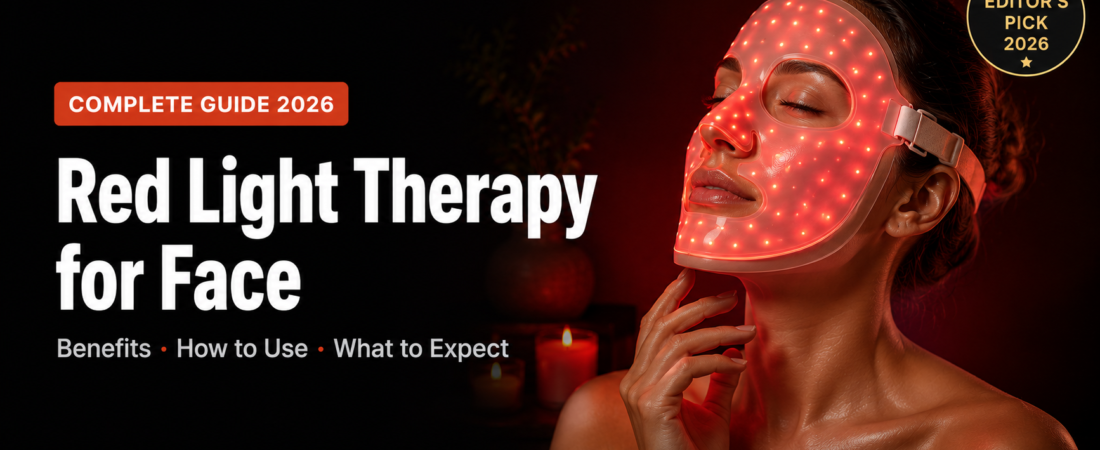
Red light therapy for the face — also called photobiomodulation (PBM), LED light therapy, or low-level light therapy — involves exposing facial skin to specific wavelengths of red and near-infrared light at low, non-thermal power levels.
The light penetrates into the skin’s layers, where it is absorbed by cells and used to support natural biological processes — primarily collagen synthesis, inflammation reduction, and cellular repair. It does not heat the skin, does not emit UV radiation, and does not cause the kind of tissue damage associated with lasers or chemical treatments.
Unlike the cancer-causing ultraviolet (UV) light from the sun or tanning booths, red light therapy doesn’t use this type of light.
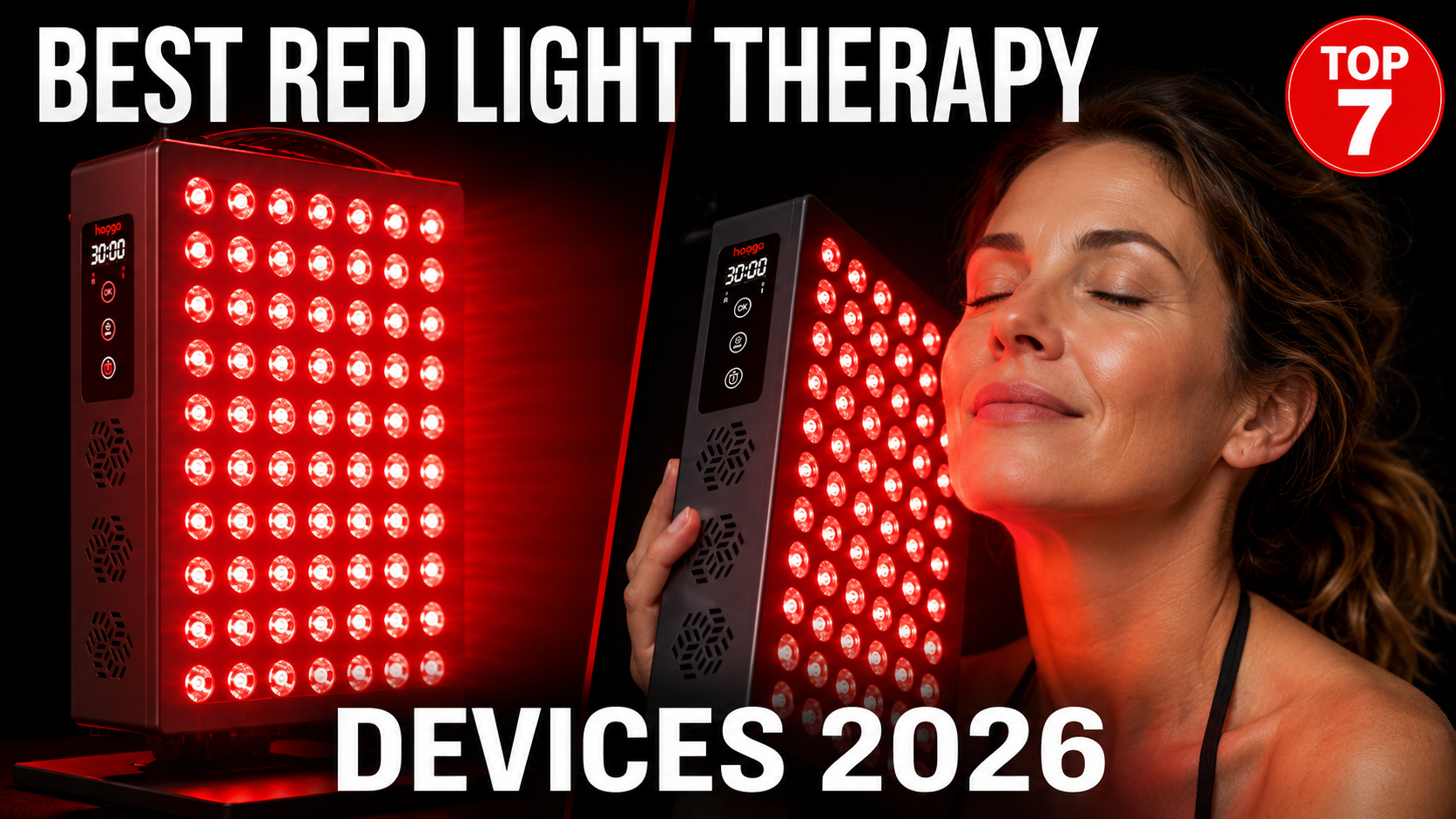
Devices come in three main formats for facial use: flexible LED masks that contour to your face, handheld wands for targeted spot treatment, and tabletop panels used at close range. Each delivers the same wavelengths — the differences lie in coverage area, session efficiency, and convenience.
How It Works on Facial Skin — The Biology
The mechanism behind red light therapy on the face is rooted in mitochondrial biology. Every skin cell — fibroblasts, keratinocytes, melanocytes — contains mitochondria that produce adenosine triphosphate (ATP), the energy molecule that powers cellular function.
Red and near-infrared light at specific wavelengths (630–660nm and 810–850nm) are absorbed by cytochrome c oxidase, a protein complex in the mitochondrial respiratory chain. When this enzyme absorbs the light, ATP production increases — giving skin cells more energy for repair, collagen synthesis, and normal function.
The downstream effects that research has documented include:
Increased fibroblast activity — fibroblasts are the cells that manufacture collagen and elastin. More active fibroblasts mean more structural protein production.
Reduced MMP-1 expression — MMP-1 is an enzyme that breaks down existing collagen. Studies show red light measurably reduces its activity, slowing collagen degradation alongside stimulating new production.
Nitric oxide release — improving local microcirculation and oxygen delivery to treated skin.
Reduced pro-inflammatory cytokines — explaining the visible redness reduction many users notice early in their protocol.
Red light therapy stimulates cellular activity and improves blood flow, lowers inflammation, and increases collagen and elastin production. Forbes
This is why the effects of red light therapy on the face are cumulative and gradual — not because the technology is weak, but because collagen remodeling is a biological process that takes weeks to months to produce visible changes.
Proven Benefits of Red Light Therapy for Face
1. Fine Line and Wrinkle Reduction
The most thoroughly documented facial benefit. Multiple controlled clinical trials confirm that red light therapy produces measurable improvements in wrinkle depth, skin roughness, and collagen density with consistent use.
A clinical study conducted on 20 healthy women using an LED mask with 630nm wavelength for two sessions per week over 3 months showed improvements across crow’s feet wrinkles, facial oval firmness, skin elasticity, dermal density, skin roughness, pore diameter, and complexion homogeneity.
Measurements taken 14 and 28 days after stopping use of the mask confirmed that the reversal of signs of aging is long-lasting — results on crow’s feet wrinkles, firmness, density, roughness, and pore diameter remained at the same level as those obtained after 3 months of use, demonstrating lasting structural and functional rejuvenation of the skin.
2. Collagen Production and Skin Firmness
A 2014 study in Photomedicine and Laser Surgery found that red and near-infrared light significantly improved skin roughness and increased collagen density after a full treatment course.
Studies specifically quantifying the molecular effect show measurable increases in type-1 procollagen and simultaneous reductions in MMP-1 (the collagen-degrading enzyme). The net effect over 8–12 weeks is a denser, firmer skin architecture — not from external filling but from the skin rebuilding its own structural proteins.
3. Skin Tone, Radiance, and Dark Spots
In one study, 90 patients received 8 LED red-light treatments to their face over 4 weeks. More than 90% of patients said they noticed some improvement, including softer and smoother skin, less redness, and lightening of dark spots.
The mechanism involves both improved microcirculation (more oxygen and nutrients reaching skin cells) and reduced melanin synthesis in some study participants. Dark spots and uneven pigmentation are among the first things users typically notice improving, often within the first 3–4 weeks.
4. Redness and Rosacea Reduction
Red light at 630–660nm measurably reduces pro-inflammatory cytokines in treated skin. For users with rosacea-prone or chronically red skin, this anti-inflammatory effect is often the most immediately noticeable benefit — sometimes apparent within the first 1–2 weeks of consistent sessions.
Amber wavelengths (590–605nm), included in some premium masks like the Solawave Wrinkle Retreat Pro, specifically target surface-level redness and may complement the anti-inflammatory effects of red light.
5. Acne Treatment (With Blue Light)
A large study found that people who used both red and blue light were more likely to completely resolve their acne. UCLA Health
Red light alone reduces inflammation and may help with existing acne lesions and scarring. The more established acne application uses blue light (415nm) to target Propionibacterium acnes bacteria at the surface level. Devices that combine red and blue (like the Dr. Dennis Gross SpectraLite FaceWare Pro) are better suited for acne + aging dual goals than red-only masks.
6. Post-Procedure Recovery and Wound Healing
In a large study, dermatologists saw that patients who received in-office red light therapy after being treated with a laser had less discoloration and swelling from the laser.
Dermatologists increasingly use LED panels post-procedure after laser treatments, microneedling, and chemical peels to reduce inflammation, accelerate healing, and improve outcomes. At home, a face mask the night after a procedure — once your skin professional confirms it’s safe — can meaningfully reduce downtime.
7. Skin Texture and Pore Appearance
Across multiple clinical studies, skin roughness measured by profilometry shows statistically significant improvement after LED red light protocols. Users typically describe this as skin feeling smoother to the touch and appearing more refined in texture. Pore appearance can improve as collagen density around follicle openings increases over 8–12 weeks.
What Red Light Therapy Cannot Do for Your Face
Honest expectation-setting is as important as knowing the benefits.
Red light therapy cannot:
Replace injectables or fillers for deep volume loss or structural sagging
Match the speed of laser resurfacing for severe sun damage or deep wrinkles
Treat active skin infections — never use on open wounds or infected skin
Reverse deep wrinkles significantly — the evidence is stronger for fine-to-moderate lines than for deep-set wrinkles
One dermatologist notes it may be helpful for some of the surface changes on the skin and superficial changes, but not for deep wrinkling.
Another dermatologist ranks red light therapy below other proven treatments like retin A, vitamin C, and light laser peels for skin rejuvenation.
Red light therapy works best as a complementary tool in a complete skincare routine — alongside proven actives like retinol, vitamin C, and SPF — not as a replacement for them.
How to Use Red Light Therapy on Your Face: Complete Protocol
Step 1: Start with a clean, bare face
Remove all makeup, SPF, serums, and skincare products. Any barrier between the LEDs and your skin reduces light penetration and results. This is non-negotiable.
Step 2: Position the device correctly
For LED masks: Put it on and ensure close, comfortable contact with your facial contours — especially around the cheeks, forehead, and jawline. Adjust the strap so the mask sits snugly without gaps.
For handheld wands: Begin at the forehead and use slow, upward strokes. Spend 3–5 minutes per zone (forehead, cheeks, jawline, under-eye area). Keep the device in contact with or millimeters from skin.
For tabletop panels: Position at 6–12 inches from your face. No closer — distance is specified by the manufacturer and matters for even coverage. Wear the goggles provided.
Step 3: Run your session
Most FDA-cleared face masks auto-shut off after their programmed session (3 minutes for the Solawave Wrinkle Retreat Pro; 10 minutes for the HigherDOSE and CurrentBody S2). For panels and wands, set a timer and follow the manufacturer’s recommended duration.
Keep your eyes closed (masks) or wear protection (panels). Relax — this is the hands-free part.
Step 4: Apply skincare immediately after
This is the step most people miss. The 5–10 minutes after your red light session are when your skin’s absorption is enhanced and receptivity to active ingredients is at its peak. Apply in this order:
Hyaluronic acid or hydrating serum — while skin is still slightly warm
Active serums — vitamin C (morning), retinol or peptides (evening)
Moisturizer
SPF — if morning session, always follow with sun protection
Do not apply retinol or acids before your session — they increase photosensitivity. Always after.
Step 5: Maintain your frequency
For the devices to be effective, they must be used multiple times a week for four to six months. It’s slow and steady. It’s not going to be anyone’s quick fix.
Protocol recommendation:
Intensive phase (weeks 1–12): 4–5 sessions per week
Maintenance (week 13 onwards): 2–3 sessions per week
Before and After: What to Expect Week by Week
Weeks 1–2: Subtle improvement in skin radiance and hydration. Redness-prone skin may look calmer. Most people notice their skin looks more “awake” or luminous — this is real, measurable improvement from improved circulation, not placebo.
Weeks 3–6: Visible texture improvement. Skin begins to feel smoother to the touch. Tone becomes more even. Dark spots may begin to lighten. Friends may notice before you do — the improvement is gradual enough that daily observers (you) often miss it.
Weeks 7–12: Fine lines begin to visibly soften as collagen remodeling takes effect. Firming becomes more apparent around the jawline, cheeks, and under-eye area. This is the phase where most users decide red light therapy is a permanent part of their routine.
Month 3 onwards: Results continue to compound. From the very first sessions, whatever the age of the person, the visible effects of reversing signs of aging are not only observable but also measurable. Maintenance sessions sustain and continue to build on the structural changes in your skin.
How to Combine Red Light Therapy With Your Skincare Routine
Red light therapy works best as an amplifier of a solid skincare routine, not a replacement for one.
Morning routine with red light therapy:
Cleanse
Red light therapy session (3–10 min)
Vitamin C serum
Moisturizer
SPF
Evening routine with red light therapy:
Double cleanse (remove makeup + cleanse skin)
Red light therapy session (3–10 min)
Hyaluronic acid
Retinol or peptide serum
Moisturizer
Ingredients that pair well with red light therapy:
✅ Vitamin C — antioxidant protection, brightening, collagen support
✓ AHA / BHA acids — enhanced penetration after session
✓ Growth factors — cellular communication support
⚠️ Never Before Session
✗ SPF — blocks light penetration; always apply after
✗ Facial oils — diffuse and scatter light
✗ Heavy occlusive creams — barrier reduces dose
✗ Makeup or tinted products — always cleanse first
✗ Retinol — increases photosensitivity if applied before
✗ Self-tanner or bronzer — interferes with light absorption
✗ Photosensitizing topicals — consult your dermatologist
For pure anti-aging, a dual-wavelength device combining 630–660nm + 810–850nm is the evidence-based standard. Adding amber or blue wavelengths addresses specific concerns (redness, acne) beyond collagen.
At-Home vs In-Office: What’s the Difference?
The red light that dermatologists offer is more powerful than that found in devices sold for at-home use. AAD
Professional LED systems deliver higher irradiance from a set distance. At-home face masks compensate through proximity — a mask pressed directly against your skin can deliver a comparable dose to a clinical unit used at greater distance, even with lower raw output.
Whether you see a dermatologist or opt solely for home use, regular red light treatments are necessary to achieve results. The therapy complements, but doesn’t replace, other skin-savvy measures, including strict sun protection, eating healthfully, getting restorative sleep, and moisturizing skin regularly.
The practical difference: in-office sessions may produce faster initial results and can be combined with other procedures by your dermatologist. At-home devices require more sessions and longer timelines, but the cumulative results over 3–6 months of consistent use can be comparable for mild-to-moderate skin concerns.
Is Red Light Therapy Safe for the Face?
For most people, yes. Red light therapy appears to be safe and isn’t associated with any side effects, at least if used short-term and as directed. This therapy isn’t toxic, not invasive and not as harsh as some topical skin treatments. Cleveland Clinic
Side effects at recommended doses are rare and mild. The most common: temporary redness or warmth in the treated area, resolving within an hour. At normal consumer device power levels and recommended session lengths, there is no evidence of cumulative harm.
Who Should Avoid Red Light Therapy on the Face
Consult a dermatologist or physician before using red light therapy on your face if you:
Take photosensitizing medications — certain antibiotics (tetracyclines), isotretinoin, St. John’s Wort, some diuretics and antidepressants
Have a photosensitivity condition — lupus, photosensitive porphyria, polymorphous light eruption
Are pregnant or breastfeeding — insufficient safety data; avoid until more research is available
Have active skin cancer or lesions of unknown nature — do not treat without oncologist guidance
Have had recent cosmetic procedures — laser resurfacing, deep chemical peels, injectables — wait until fully healed
Use topical retinoids prescribed at high strength — consult your prescriber about timing relative to sessions
Always check your specific device’s contraindications regarding Fitzpatrick Skin Types V–VI.
Choosing a Device for Your Face
The most important specs when selecting a facial red light therapy device:
1. FDA Clearance — not just registration. Cleared means the device has been reviewed for safety and efficacy.
2. Verified wavelengths — must state exact nm values (630–660nm red, 810–850nm NIR). If a device only says “red LED” without nm, that’s a red flag.
3. Published irradiance (mW/cm²) — the therapeutic range for facial skin is 30–65 mW/cm² at skin surface. Devices that don’t publish this number often fall below therapeutic threshold.
4. Flexible silicone design — for full-face masks, flexibility ensures LED contact across all facial contours, including around the nose, chin, and eye area.
5. Session length that fits your lifestyle — a 3-minute mask you’ll actually use every day beats a 10-minute mask you skip three times a week.
Red light therapy stimulates cellular energy production in skin cells by activating cytochrome c oxidase in the mitochondria. For the face specifically, this produces several measurable effects: increased fibroblast activity and collagen production (reducing fine lines and improving firmness), reduced MMP-1 expression (slowing collagen breakdown), improved local microcirculation (better nutrient delivery and skin radiance), and reduced pro-inflammatory cytokines (calming redness and rosacea-prone skin). Studies also document improvements in skin texture, pore appearance, tone evenness, and dark spot reduction with consistent use over 8–12 weeks.
How long does red light therapy take to show results on the face?
With consistent use of 3–5 sessions per week using an FDA-cleared device: Weeks 1–2: subtle improvements in radiance and redness reduction — skin looks more even and “awake.” Weeks 3–6: visible texture improvement, more even tone, dark spots begin to lighten. Weeks 7–12: measurable fine line softening and early firming effects as collagen remodeling builds. Month 3+: results compound and continue to improve. A clinical study found results lasted up to one month after stopping treatment, demonstrating lasting structural rejuvenation. The most common reason people don’t see results is inconsistency — averaging 1–2 sessions per week when their goal requires 4–5.
Should I put anything on my face before red light therapy?
Nothing. Always use red light therapy on a completely clean, bare face — no makeup, SPF, serums, oils, or moisturizers. Any product on your skin creates a barrier that reduces light penetration and results. The correct sequence is: cleanse → red light therapy → skincare. The 5–10 minutes immediately after your session are when skin absorption is enhanced. Apply your serums, vitamin C (morning), retinol or peptides (evening), and moisturizer after the session — not before. SPF should always follow if you’re doing a morning session.
Can I use red light therapy on my face every day?
Daily use at your device’s recommended session length is generally safe. However, daily use is not significantly more effective than 4–5 times per week for most users. Red light therapy follows a biphasic dose response — excessive use can produce diminishing returns or mild skin sensitivity rather than better results. Most clinical protocols recommend 3–5 sessions per week during the intensive phase (first 8–12 weeks), then 1–3 sessions per week for maintenance. The key is always consistency over raw frequency. See our full guide: How Often Should You Use Red Light Therapy?
Can I use red light therapy with retinol?
Yes — and done in the correct order, the combination is more powerful than either alone. The sequence matters: always perform red light therapy on bare skin first, then apply retinol afterward. Never apply retinol before your session — retinoids increase photosensitivity and create a barrier that reduces light penetration. Post-treatment skin is in an enhanced absorption state, making the 5–10 minutes after your session the ideal window for retinol, peptides, and other actives to penetrate more effectively. If you use prescription tretinoin at high strength, consult your dermatologist about the correct protocol before combining with red light therapy.
Is red light therapy good for wrinkles?
Yes — particularly for fine-to-moderate lines. Multiple controlled clinical trials show measurable reduction in wrinkle depth, improved skin roughness measured by profilometry, and increased intradermal collagen density after consistent LED red light protocols. One study showed improvements in crow’s feet wrinkles, facial oval firmness, skin elasticity, and dermal density after 3 months of twice-weekly use — with results lasting up to one month after stopping. The honest caveat: red light therapy is more effective for fine lines and early-to-moderate wrinkling than for deep-set wrinkles. For severe or deep wrinkles, it works best as a complementary tool alongside injectables, laser, or medical-grade retinoids rather than as a standalone treatment.
Is red light therapy safe for all skin tones?
Most FDA-cleared red light therapy devices are specified as safe for all Fitzpatrick skin types. Red and near-infrared light does not target melanin the way lasers and IPL do, making it significantly lower-risk for darker skin tones than ablative treatments. That said, some specific devices note contraindications for Fitzpatrick Types V–VI in their product documentation — always check your device’s manual and consult a dermatologist if you have any concerns. The HigherDOSE and CurrentBody S2 are both specified as safe for all skin tones.
What is the difference between red light therapy at home vs at a dermatologist?
Professional LED systems used in dermatology offices deliver higher raw irradiance from a set distance. At-home face masks compensate through proximity — a mask pressed directly against your skin can deliver a comparable total dose to a clinical unit used at greater distance. In-office sessions may produce faster initial results and can be combined with other procedures (microneedling, laser, chemical peels) by your dermatologist. At-home devices require more sessions and longer timelines but can produce comparable results for mild-to-moderate concerns over 3–6 months of consistent use. For most people, at-home use is the more practical and cost-effective long-term option — a professional LED facial costs $150–$300 per session, while a quality at-home mask pays for itself within a few months.
Is red light therapy good for acne?
Red light alone reduces inflammation and may help with existing acne lesions and post-acne scarring. For active acne treatment, the strongest approach combines blue light (415nm) with red light — blue light directly targets Propionibacterium acnes bacteria at the skin surface, while red reduces inflammation and supports healing. A large study found that people who used both red and blue light were more likely to completely resolve their acne than those using either wavelength alone. If acne is your primary concern alongside aging, the Dr. Dennis Gross SpectraLite FaceWare Pro is the best FDA-cleared dual red+blue mask for at-home use.
Can red light therapy tighten skin on the face?
Yes — to a measurable degree, through collagen remodeling rather than instant tightening. Clinical studies show improved skin elasticity and dermal density after consistent LED red light protocols, which translates to firmer-feeling skin over time. Near-infrared wavelengths (810–850nm) penetrate deeper into the dermis than red light alone, supporting the collagen scaffold responsible for skin structural support. The CurrentBody Skin LED Mask Series 2’s unique 1072nm deep NIR wavelength is specifically associated with deeper tissue remodeling beyond what standard 830nm NIR achieves. Results are gradual — expect early firming effects around weeks 7–12, with continued improvement through month 3 and beyond. For significant skin laxity, red light therapy works best as a complement to other interventions rather than a standalone treatment.