This Nanoleaf red light therapy review covers a brand most people recognize for something entirely different: colorful, modular smart-lighting panels popular in gaming setups and home decor. Nanoleaf’s move into red light therapy is its first wellness product line, debuted at CES 2025 — one of the largest consumer tech trade shows in the world — and positioned explicitly by independent tech press as a lower-cost alternative to CurrentBody’s flagship mask. This review covers what that positioning actually holds up to, the brand’s full red light lineup (which is already broader than several dedicated red light therapy companies), and where Nanoleaf’s specific engineering background does and doesn’t translate into a genuine advantage.
Table of Contents
Company Overview
Nanoleaf is an established consumer smart-lighting company, best known for RGB LED wall panels and light bars used widely in gaming and home-decor setups, with a customer base built over years in that specific category. Its LED Light Therapy Face Mask, launched in 2025 and shown publicly at CES that year, represents the company’s first move into wellness technology — a notably different pivot than most brands in this category, since Nanoleaf’s core expertise is genuinely LED and lighting engineering rather than skincare or beauty products. This gives Nanoleaf a plausible technical credibility angle most red light therapy entrants lack: the company isn’t learning LED engineering for the first time to enter this space, it’s applying existing lighting expertise to a new application. The brand sells through its own site and an official “Nanoleaf USA” Amazon storefront.
Product Lineup
Unlike Wavytalk’s single-product entry into this category, Nanoleaf has already built out a genuine multi-device red light therapy line in a relatively short time.
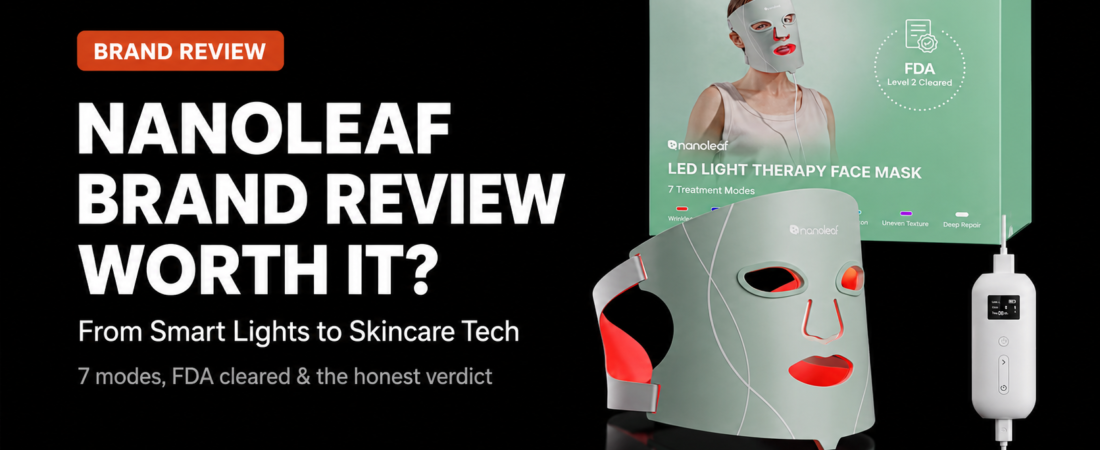
Nanoleaf LED Light Therapy Face Mask is the flagship, using 432 LEDs across seven distinct treatment modes — more color/mode variety than almost any other mask covered on this site: Red (wrinkles), Blue (acne), Green (hyperpigmentation), Cyan (irritation/redness), Yellow (inflammation), Purple (texture), and White (deep repair) — with near-infrared paired into every mode rather than isolated to one or two settings, a genuinely different design choice than most competitors. It’s FDA-cleared, cordless with USB-C charging, and runs 5-10 minute sessions.
Nanoleaf 6-in-1 Red Light Therapy Wand extends the brand into targeted, handheld treatment, combining red and blue light with vibration, heat, cooling, and microcurrent facial massage — a genuinely feature-dense multi-modality device for face and neck use, also FDA-cleared.
Nanoleaf Red Light Therapy Panel rounds out the lineup with 160 dual-chip LEDs for face and body coverage, extending the brand beyond facial-only devices into the same panel category covered in our best red light therapy panels roundup.
Three genuinely distinct device formats within roughly a year of category entry is a faster buildout than most brands manage, suggesting real R&D investment behind the pivot rather than a single opportunistic product launch.
What Makes This Brand Different
Nanoleaf’s most explicit differentiator is direct: it was positioned by independent tech press at launch as a specifically cheaper alternative to CurrentBody’s Series 2 mask, with a comparable 7-mode feature set at roughly a third of the price. Its second differentiator is a genuine design choice — pairing NIR with every one of its seven color modes rather than isolating near-infrared to just one or two settings the way most competitors do. This means even the acne-focused blue mode or the hyperpigmentation-focused green mode delivers some near-infrared benefit alongside the primary wavelength, a more integrated approach than the segmented mode designs used elsewhere in this category. Whether seven distinct color modes is meaningfully better than three or four focused ones is a fair question — the research support for wavelengths like purple and white, included here as “texture” and “deep repair” modes, is considerably thinner than for the well-established red/blue/NIR combination, so treat the extra color variety as a nice-to-have rather than the mask’s core value proposition.
The Science / Technology Approach
The mask’s core wavelengths — red for wrinkles, blue for acne, paired with near-infrared throughout — sit within established photobiomodulation research ranges. Nanoleaf states the device is FDA-cleared and describes a specific dosing framework: a 5-minute session delivers roughly 30 J/cm² (a moderate dose), with the brand recommending 5-10 minute sessions, 3-5 times weekly, for visible improvement in 2-6 weeks and fuller results by 8-10 weeks. This level of specific dosing transparency (joules per square centimeter, not just minutes) is more detailed than most competitors in this category provide, and it’s consistent with what you’d expect from a company with genuine lighting-engineering background rather than a company that outsourced its LED specifications to a generic contract manufacturer.
Pricing & Value Positioning
Nanoleaf’s mask lists at $250 but is frequently discounted to around $150 (a 40% markdown seen in multiple deal-tracking sources), positioning it at roughly a third of CurrentBody’s Series 2 price while matching or exceeding its mode count. This pricing strategy is a deliberate, publicly stated market position — Nanoleaf isn’t competing on being the cheapest mask in the category (it’s still priced above XSSNVV, Wavytalk, and INIA’s entry tiers), but on being a meaningfully cheaper alternative to premium retail brands while retaining FDA clearance and a comparable feature set.
Reputation & Customer Feedback
Independent buyer reviews are generally positive on comfort and ease of use — one detailed UK review specifically praised the adjustable straps, USB-C portability, and noticeable skin clarity improvement after a few weeks of red and blue mode use. As a newer entrant to this specific category (2025 launch), Nanoleaf doesn’t yet have the multi-year review accumulation of brands like iRestore or CurrentBody, but its existing reputation in smart lighting — a category where product reliability and build quality are core to the brand’s original business — is a relevant, if indirect, signal about manufacturing standards.
Comparison vs Competing Brands
Nanoleaf vs Premium Mask Brands
Modes, price, and FDA clearance compared.
← Scroll to see all →
Brand / Product
LEDs
Modes
FDA Cleared
Effective Price
NanoleafBEST VALUE VS PREMIUMNIR paired with every mode
Against the field, Nanoleaf’s clearest case is direct: FDA clearance and a 7-mode feature set at roughly a third of CurrentBody’s price, backed by genuine lighting-engineering background rather than a beauty-industry pivot. Where it’s still building its case is category-specific longevity — CurrentBody has over 15 years of skincare-device-specific reputation; Nanoleaf has one year in wellness, however credible its adjacent lighting expertise.
Common Misconceptions About This Brand
The most common misconception is assuming Nanoleaf’s core business (colorful smart-home lighting) has nothing to do with red light therapy engineering — in reality, LED driver design, thermal management, and light-output consistency are genuinely relevant skills that transfer between decorative smart lighting and therapeutic LED devices, even though the underlying wavelength science and clinical application differ substantially. A second misconception is assuming seven treatment modes means seven equally well-supported therapeutic mechanisms — the red/blue/NIR combination has the strongest research base among Nanoleaf’s modes; the additional colors (purple, white, cyan) are reasonable additions but shouldn’t be weighted as equally proven.
Who Should Buy From This Brand
Nanoleaf is a strong fit for buyers specifically drawn to the CurrentBody-style feature set and FDA clearance but unwilling to pay CurrentBody’s price, buyers who want a brand with genuine underlying LED engineering credibility even if it’s new to skincare specifically, and buyers interested in a broader red light ecosystem (mask, wand, panel) from one company. It’s a weaker fit for buyers who specifically prioritize the longest possible category-specific track record, where established skincare-device brands still have a longer history, and for buyers skeptical of extra treatment modes beyond the core red/blue/NIR combination.
Our Verdict
4.3/5. Nanoleaf makes a genuinely strong case in this category: real trade-show visibility, FDA clearance, transparent dosing information, a broader-than-expected three-device lineup built in roughly a year, and a specific, credible value proposition against premium competitors. The brand’s newness to skincare specifically is the main open question, but its underlying LED engineering background is a legitimate, differentiated credential most red light therapy brands can’t claim. For buyers specifically weighing Nanoleaf against CurrentBody, the case for Nanoleaf on value alone is compelling.
FAQ
Frequently asked questions
Common questions about Nanoleaf’s red light therapy line.
Yes — Nanoleaf is primarily known for smart-home RGB lighting panels. Its red light therapy line, launched in 2025 and shown at CES that year, is the company’s first wellness product category, applying its existing LED engineering background to a new application.
Buying Decision
Independent tech press positioned it that way at launch specifically — comparable FDA clearance and a broader mode set, at roughly a third of CurrentBody’s price. CurrentBody still has a longer skincare-specific track record and its own internal testing program (Veritace®), which Nanoleaf’s newer entry doesn’t yet match.
Buying Decision
No. Red, blue, and near-infrared have the strongest research support among the seven modes. Additional colors like purple and white are reasonable additions, but their specific therapeutic mechanisms are less established in the broader photobiomodulation literature than the core three.
Science
Yes — Nanoleaf also sells a 6-in-1 red light therapy wand (combining light, vibration, heat, cooling, and microcurrent) and a red light therapy panel for face and body, both launched within roughly a year of the flagship mask.
Usage
Yes, the mask, wand, and panel are all marketed as FDA-cleared, putting Nanoleaf’s entire red light lineup on par with premium brands in this specific regulatory respect.
Safety
Nanoleaf’s own guidance suggests visible improvement in 2-6 weeks of consistent use (5-10 minutes, 3-5 times weekly), with fuller results typically by 8-10 weeks — a timeline consistent with the broader photobiomodulation research referenced across this site.
Results
Pricing reflects brand positioning and overhead as much as hardware differences — CurrentBody’s price includes its retail presence (Harrods, Selfridges) and internal Veritace® testing program marketing; Nanoleaf is explicitly positioned as the value alternative with comparable core specs.
Buying Decision
Partially. Skills like driver design, thermal management, and consistent light output genuinely transfer from decorative smart lighting to therapeutic devices. The clinical application and specific wavelength science are a different domain Nanoleaf is newer to, which is why the company’s FDA clearance and stated dosing data matter as independent verification points.
Science
Yes — it’s cordless with USB-C rechargeable battery and adjustable velcro straps, designed for hands-free, portable use during a session rather than requiring you to sit still near an outlet.
Usage
See Nanoleaf’s flagship mask432 LEDs, 7 modes, FDA cleared
Nanoleaf’s pivot from smart lighting into red light therapy is one of the more credible category crossovers covered in this brand series — the underlying engineering discipline genuinely transfers, and the company backed that pivot with real trade-show presence and a fast, three-device product buildout rather than a single opportunistic launch. Whether it’s actually a better buy than CurrentBody depends on how much you value that brand’s longer skincare-specific history against Nanoleaf’s roughly two-thirds price discount. For the fuller picture of where masks like this rank across the category, see our best LED face masks roundup, and for background on the wavelengths referenced throughout this review, our wavelengths explainer covers the fundamentals.
Red light therapy devices are not intended to diagnose, prevent, or treat any medical condition. Individual results may vary. Consult a healthcare provider before starting any new health regimen.