This KingPavonini review covers a brand that stands out from several similarly-sized competitors in this series on one specific, checkable point: at least one product in its lineup publishes an actual irradiance range (60-250 mW/cm² across its five intensity levels) — a real, disclosed number most belt-focused brands at this price tier skip entirely. KingPavonini also maintains a genuine independent site (kingpavonini.com) with a broader recovery-equipment catalog beyond red light therapy, including ice pack wraps for sprains and post-surgery recovery. This review covers that full lineup, the brand’s design philosophy, and where its published specs genuinely differentiate it from the crowded belt category covered elsewhere in this series.
Table of Contents
Company Overview
KingPavonini operates a real, independent site alongside its Amazon presence, organized into multiple product collections including light therapy products and separate recovery items like ankle and foot ice pack wraps for sprains, plantar fasciitis, and post-surgery recovery — a genuinely broader wellness-and-recovery catalog than a single-category red light brand. The company states its design philosophy centers on “the right balance of ergonomics and lifestyle choices,” emphasizing that its products aim to be “ergonomically designed for the human body” rather than purely functional. Customer service is handled through a dedicated email with a stated 24-hour reply commitment. We did not locate a founding date or founder name, consistent with several brands in this series that maintain real product infrastructure without an extensive public company narrative.

Origin Story & Technology Background
KingPavonini’s public materials don’t offer a specific founding story, but its product engineering shows genuine iterative development across multiple generations of the same core belt concept — an earlier, simpler belt design (fewer modes, no published irradiance) alongside a newer, more sophisticated 2-in-1 panel/belt system with published intensity data and app-independent physical controls, suggesting real ongoing product refinement rather than a single static launch. The brand’s technology approach consistently uses a three-wavelength combination (630nm, 660nm, 850nm) across its main belt products — an addition of 630nm alongside the more common 660nm/850nm pairing used by most competitors in this series, which the brand specifically markets as adding a slimming/circulation benefit distinct from 660nm’s skin-repair focus, a claim that should be treated as brand positioning rather than independently verified.
Product Lineup
KingPavonini’s catalog spans belts, a convertible panel/belt hybrid, and a large full-body mat, plus adjacent recovery products outside the red light category.
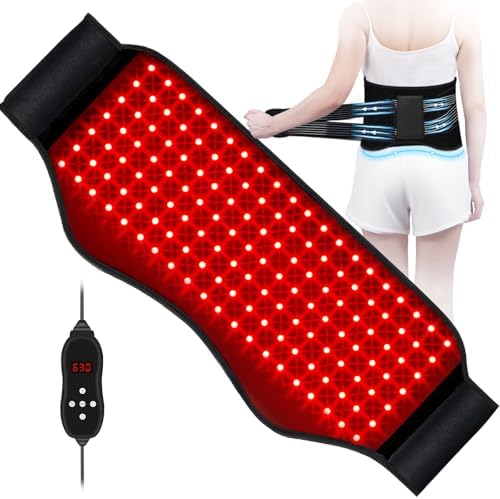
KingPavonini Red Light Therapy Belt (140 LEDs, 420 chips) is the brand’s core, most-reviewed product — three wavelengths (630nm, 660nm, 850nm) across 140 beads, 12 total mode combinations (4 wavelength options × 3 pulse settings including 10Hz and 40Hz), 5 brightness levels producing a stated 88°F to 113°F warmth range, and an ergonomic contoured lumbar design with compression straps for a snugger fit than a simple elastic wrap.
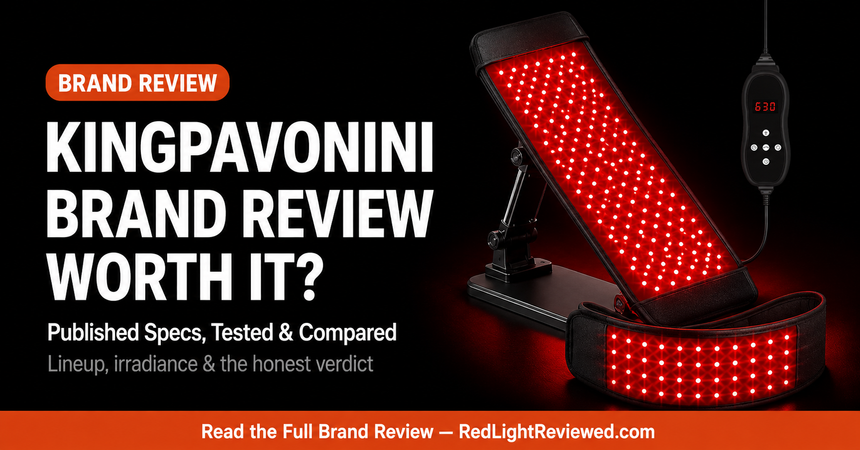
KingPavonini 2-in-1 Panel/Belt is the brand’s more sophisticated offering — a silicone panel mounted on an adjustable stand (extendable pole, 360° rotating head, weighted non-slip base) that detaches into a wearable belt, giving buyers two device formats in one purchase. It uses 136 LEDs (408 chips) across 9 total mode combinations and, notably, publishes a specific irradiance range of 60-250 mW/cm² across its 5 intensity levels (L0-L4) — a real, disclosed number that stands out clearly against most belt-tier competitors in this series that publish no irradiance figure at all.
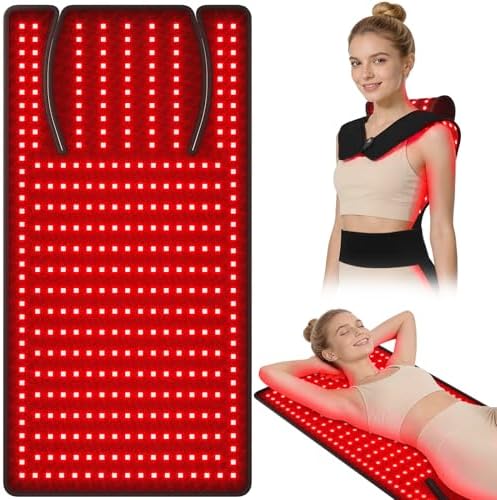
KingPavonini 33″x17″ Mat (380 LEDs) extends the brand into full-body mat territory, using 2-in-1 chip technology (660nm/850nm) at a stated 60W output the brand claims delivers up to 70% stronger intensity than “basic” infrared pads — a comparative claim worth treating as marketing positioning rather than independently verified, though the specific wattage figure itself is a real, checkable spec.
Beyond red light products, KingPavonini’s broader catalog includes ankle and foot ice pack wraps for sprains and post-surgery recovery — a genuinely different product category reflecting a wellness-and-recovery brand identity rather than a red-light-only operation.
What Makes This Brand Different
KingPavonini’s clearest differentiator is the published 60-250 mW/cm² irradiance range on its 2-in-1 panel/belt product — a real, specific number that immediately distinguishes it from most direct competitors in the belt category covered in this series (ALLOLO, USUIE, GMOWNW), none of which disclose comparable figures. The 2-in-1 convertible design itself is a second, genuine differentiator — a single purchase functioning as both a stationary panel with adjustable stand and a detachable wearable belt, more format flexibility than most single-purpose competitors offer at a similar price.
The Science / Technology Approach
KingPavonini’s three-wavelength approach (630nm, 660nm, 850nm) across its main belt line adds a wavelength most direct belt competitors skip — 630nm sits close to the well-established 633nm/660nm red-light range used throughout this category, so its inclusion is scientifically reasonable even if the brand’s specific “slimming” claim attached to it goes beyond what the broader photobiomodulation evidence directly supports. The published 60-250 mW/cm² irradiance range on the 2-in-1 product is a genuine positive, though as with most brands at this tier, it reflects KingPavonini’s own testing rather than independent third-party verification. None of KingPavonini’s products carry FDA clearance.
Clinical Evidence & Expert Endorsements
KingPavonini does not claim independent clinical studies or third-party lab verification. Its evidence case rests on the disclosed hardware specifications discussed above — genuinely more detailed than several similarly-priced competitors, but still brand-reported rather than externally validated. We did not locate named expert or physician endorsements for this brand.
Pricing & Value Positioning
KingPavonini’s products sit in the budget-to-mid belt tier, with the standard 140-LED belt at the lower end and the 2-in-1 panel/belt system commanding a moderate premium for its added stand, mode count, and published irradiance data. The 380-LED mat represents the brand’s largest, highest-price offering. This tiered structure gives buyers a genuine choice between simple wearable-only and more feature-rich convertible options within the same brand.
Reputation & Customer Feedback
KingPavonini maintains visible presence through Amazon Live shopping videos featuring the brand directly demonstrating its products — a modest but real engagement signal. Independent retail distribution through Walmart.com in addition to Amazon and the brand’s own site gives KingPavonini a broader multi-channel retail footprint than several single-platform competitors in this series. We did not locate extensive independent editorial coverage or a Trustpilot presence specific to this brand.
Comparison vs Competing Brands
KingPavonini vs Other Belt Brands
Published specs, format flexibility, and retail presence compared.
| Brand | Published Irradiance | Wavelengths | Format | Retail Channels | Entry Price |
|---|---|---|---|---|---|
| KingPavoniniDISCLOSED SPECS Real multi-channel retail | 60-250 mW/cm² (2-in-1 model) | 630/660/850nm | Belt + convertible panel | Amazon, Walmart, own site | Check price → |
| ALLOLO Size-tiered lineup | Not disclosed | 660/850nm | Belt/mat only | Amazon | Check price → |
| Morfone Published irradiance (panel) | 68 mW/cm² (panel) | 660/850/940nm | Panel + wand | Amazon | Check price → |
Against the field, KingPavonini’s clearest advantage is disclosed hardware specificity — the published irradiance range on its 2-in-1 system and the added 630nm wavelength genuinely distinguish it from most direct belt-category competitors in this series. Where it loses ground to Hooga or BestQool is independent verification and a longer, more thoroughly documented brand history; where it loses ground to LifePro is warranty length.
Common Misconceptions About This Brand
The most common misconception is assuming the “30% larger light area” and “70% stronger intensity” comparative claims in KingPavonini’s marketing reflect independently benchmarked testing against specific named competitors — these are brand-stated comparisons against unspecified “typical” or “basic” products, not a documented head-to-head test, and should be read as marketing framing rather than verified comparative data. A second misconception is assuming the 630nm wavelength’s marketed “slimming” benefit is as well-established in research as its skin-repair and circulation effects — the broader evidence for red light’s role in localized fat reduction is considerably thinner and more contested than its evidence for skin and circulation benefits.
Who Should Buy From This Brand
KingPavonini is a strong fit for buyers who specifically want a published irradiance figure at the belt-tier price point, buyers interested in the 2-in-1 panel/belt format flexibility, and buyers who want to purchase from a brand with a genuine multi-channel retail presence (Amazon, Walmart, own site) rather than an Amazon-only operation. It’s a weaker fit for buyers who want independent, third-party verification of the brand’s stated specs, and for buyers prioritizing a longer, more thoroughly documented company history.
Our Verdict
4.0/5. KingPavonini earns a solid score by doing something genuinely uncommon at its price tier: disclosing a real, specific irradiance range on at least one product, backed by a broader multi-channel retail presence and a wellness-recovery catalog extending beyond red light alone. Its main limitation is the same one shared by most brands at this tier — no independent verification behind its published numbers, and comparative marketing claims that should be read skeptically rather than as benchmarked fact. For buyers who specifically value disclosed hardware specs over brand prestige, it’s a reasonable, well-differentiated choice within the belt category.
FAQ
Frequently asked questions
Common questions about KingPavonini and its lineup.
At least one product (the 2-in-1 panel/belt) publishes a specific irradiance range (60-250 mW/cm² across 5 intensity levels) — a real, disclosed number most belt-category competitors don’t provide. Comparative claims like “30% larger” or “70% stronger” are brand-stated marketing framing, not independently benchmarked.
ScienceThe standard belt (140 LEDs) is wearable-only. The 2-in-1 system (136 LEDs) mounts on an adjustable stand as a stationary panel and can detach into a wearable belt, giving you both formats in one purchase, plus a published irradiance range the standard belt doesn’t disclose.
UsageThe 630nm wavelength itself sits within well-studied red-light ranges, but the specific claim linking it to localized fat reduction or “slimming” rests on thinner, more contested evidence than red light’s more established skin and circulation benefits. Treat it as a secondary marketing claim rather than the product’s core, well-supported mechanism.
ScienceNo, none of KingPavonini’s products carry FDA clearance, consistent with most brands at this price tier covered across this site.
SafetyYes — the brand’s own site includes a separate recovery-equipment catalog with ankle and foot ice pack wraps for sprains, plantar fasciitis, and post-surgery recovery, reflecting a broader wellness-and-recovery brand identity.
UsageKingPavonini sells through Amazon, its own site (kingpavonini.com), and Walmart.com — a genuinely broader multi-channel retail presence than several single-platform competitors covered in this series.
UsageFinal Thoughts
KingPavonini’s case rests on genuine hardware transparency — a published irradiance range most belt-tier competitors skip — combined with a real multi-product recovery catalog and multi-channel retail presence. For buyers comparing red light belts across brands, our best red light therapy belts roundup provides broader context on how KingPavonini’s specs stack up against the wider category.
Red light therapy devices are not intended to diagnose, prevent, or treat any medical condition. Individual results may vary. Consult a healthcare provider before starting any new health regimen.