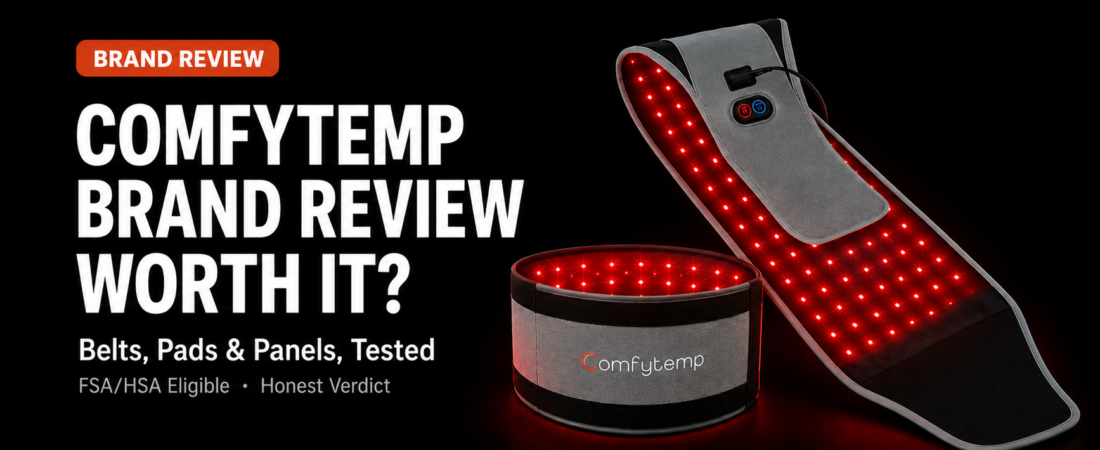
This Comfytemp review covers a brand behind several products already featured across this site’s roundups — a cordless massage belt, a corded budget belt, a high-output floor-standing panel, and a wearable pad — manufactured by Shenzhen Yicai Health Technology Co., Ltd., a Chinese health-technology company with a genuinely broader electrotherapy device catalog than the red light-only positioning most people encounter on Amazon. This review covers that manufacturing background, the full red light product lineup, and an honest look at where Comfytemp’s real regulatory history (in adjacent device categories) does and doesn’t extend to its red light therapy products specifically.
Table of Contents
Company Overview
Comfytemp is manufactured by Shenzhen Yicai Health Technology Co., Ltd., based in the Longhua district of Shenzhen, China — a specific, verifiable address (11th floor, Zhenqian Building, Yousong Community) confirmed through FDA regulatory filing documents rather than only brand marketing. The company’s own tagline, “Deliver warmth to the world,” reflects a broader thermal and physical-therapy product focus than red light alone: Shenzhen Yicai’s catalog includes TENS (transcutaneous electrical nerve stimulation) and EMS (electrical muscle stimulation) devices with genuine FDA 510(k) filing history, sauna blankets, and a companion mobile app ecosystem (Comfytemp app and a separate Comfytemp-Pillbox medication management app) for managing connected devices — giving the company a more diversified health-technology footprint than a red-light-only brand would have. This context matters for evaluating Comfytemp’s red light therapy line specifically: the parent company has demonstrated real experience navigating FDA regulatory processes for its TENS/EMS product lines, even though that history doesn’t automatically transfer to clearance status for the red light products covered in this review.
Origin Story & Technology Background
Unlike several brands profiled earlier in this series with personal founder injury stories (Mito Red Light, LifePro, NovaaLab), Comfytemp’s public narrative is company-first rather than founder-first — we did not locate a named founder or personal origin story, consistent with a more traditional Chinese manufacturing company structure building out a consumer health-tech brand rather than a Western direct-to-consumer startup built around one person’s story. What is verifiable is the company’s device engineering background across adjacent categories: FDA filing documents for Comfytemp-branded TENS and EMS devices describe genuine regulatory submissions with named company representatives (including a Mr. Xie Jie associated with filings), predicate device comparisons, and specific indications-for-use language — the standard hallmarks of a company that has actually gone through FDA’s 510(k) process for at least some of its product lines, even if not specifically for its red light devices.
Product Lineup
Comfytemp’s red light therapy catalog spans wearable belts, wearable pads, and a floor-standing panel — a genuinely diversified format range already reflected across three of this site’s roundups.
Comfytemp Cordless Massage Belt, covered in our best red light therapy belts roundup, combines 660nm/850nm light with vibration massage in a battery-powered, FSA/HSA-eligible wearable design specifically for lower back and waist use.
Comfytemp 126-LED Corded Belt, also covered in our belts roundup and our best budget devices roundup, is the brand’s more affordable, corded option — four modes including a 10Hz pulse setting, FSA/HSA eligible, at one of the lower prices among FSA/HSA-eligible options covered across this site.
Comfytemp 55W High-Output Panel, covered in our best red light therapy panels roundup, takes a genuinely different mechanical approach than most panels in that comparison — a reinforced metal base and 360° ball-joint arm extending up to 40 inches, letting you position the panel overhead to lie beneath it for a more full-body-adjacent session rather than sitting upright in front of a desktop unit, with app-based smart control alongside physical controls.
Comfytemp 24″x12″ Wearable Pad extends the brand into larger-area body coverage in a flexible, wrap-style format, offering four modes and three intensity levels alongside FSA/HSA eligibility.
This spread — cordless belt, corded belt, floor-standing panel, and wearable pad — gives Comfytemp genuine format diversity within the red light category specifically, closer in breadth to Hooga’s multi-format catalog than to single-product brands covered elsewhere in this series.
What Makes This Brand Different
Comfytemp’s clearest differentiator is mechanical design variety within a consistent FSA/HSA-eligible positioning — three of its four products covered across this site’s roundups carry that eligibility, a genuine, consistent cost benefit most competitors offer inconsistently across their own catalogs. The 55W panel’s overhead, lie-beneath mounting arm is a second genuine differentiator, addressing a use case (positioning a panel above rather than in front of you) that few competitors in this site’s panels roundup replicate. The parent company’s broader TENS/EMS/sauna blanket catalog, while not red-light-specific evidence, does suggest a manufacturer with real experience building consumer health devices through FDA regulatory processes for at least some of its product categories.
The Science / Technology Approach
Comfytemp’s red light products consistently use the well-established 660nm/850nm wavelength pairing across its belt and pad lines. The 55W panel publishes a specific 143mW/cm² irradiance figure at 6 inches — a real, disclosed number, though as with most brands at this tier, it comes from Comfytemp’s own testing rather than independent third-party verification. We did not locate FDA clearance specifically for Comfytemp’s red light devices, distinct from the parent company’s demonstrated TENS/EMS filing history discussed above — buyers should not assume the company’s regulatory experience in adjacent device categories automatically extends to clearance status for its light therapy products specifically.
Clinical Evidence & Expert Endorsements
Comfytemp does not claim independent clinical studies or third-party lab verification specific to its red light products. Its evidence tier sits alongside most brands in this series relying on general photobiomodulation research rather than device-specific trials, though the parent company’s genuine FDA 510(k) filing history for its TENS/EMS lines is a real, checkable regulatory credential worth noting as company-level context, distinct from red-light-specific clinical evidence. We did not locate named celebrity or physician endorsements specific to the red light therapy line.
Pricing & Value Positioning
Comfytemp’s red light products span a genuinely wide range — the 126-LED corded belt sits among the more affordable FSA/HSA-eligible options covered in this site’s budget roundup (roughly $50-$80), the cordless massage belt commands a moderate premium for battery power and vibration (roughly $70-$110), the wearable pad sits in a similar mid-range, and the 55W panel represents the brand’s premium entry (roughly $150-$200) reflecting its mechanical arm and app control features. This spread lets buyers access the FSA/HSA-eligible Comfytemp ecosystem at multiple price points rather than committing to a single fixed tier.
Reputation & Customer Feedback
Comfytemp’s companion mobile app carries a modest 3.1-star rating across 103 reviews on Google Play with over 10,000 downloads — real, if unremarkable, engagement data for the connected-device software side of the brand, worth noting as a data point separate from the physical products’ own Amazon review scores, which we covered individually in this site’s respective roundups. We did not locate extensive independent editorial coverage of the Comfytemp brand specifically beyond standard product review content, placing its reputation evidence closer to the Amazon-and-app-store-concentrated pattern seen with several manufacturing-first brands in this series rather than the broader independent press footprint found for brands like Hooga or NovaaLab.
Comparison vs Competing Brands
Comfytemp vs Other Multi-Format Brands
Format variety, FSA/HSA eligibility, and manufacturing background compared.
Against the field, Comfytemp’s clearest advantage is FSA/HSA eligibility consistently applied across most of its catalog combined with genuine mechanical design variety (the overhead-arm panel especially). Where it loses ground to Hooga is independent reviewer coverage and a longer-established red-light-specific track record; where it loses ground to BestQool or Mito Red Light is any red-light-specific FDA clearance or independent testing verification, despite the parent company’s real regulatory experience in adjacent device categories.
Common Misconceptions About This Brand
The most common misconception is assuming the parent company’s demonstrated FDA filing history for TENS and EMS devices means its red light therapy products carry equivalent regulatory clearance — these are separate product categories with separate regulatory pathways, and buyers should verify red-light-specific clearance status directly on the current listing rather than assuming it transfers from the company’s other device lines. A second misconception is assuming all Comfytemp products share identical specs simply because they’re the same brand — as this site’s own roundups show, the four Comfytemp products covered span meaningfully different mechanical designs, price points, and FSA/HSA eligibility, and buyers should check the specific product page rather than generalizing across the catalog.
Who Should Buy From This Brand
Comfytemp is a strong fit for buyers who want consistent FSA/HSA eligibility across multiple price points and formats within one brand, buyers specifically interested in the 55W panel’s overhead lie-beneath mounting design, and buyers who want to compare a cordless-versus-corded belt option from the same manufacturer at different price points. It’s a weaker fit for buyers who specifically require red-light-device FDA clearance (not just company-level regulatory experience in adjacent categories) verified before purchase, and for buyers who want extensive independent editorial or reviewer coverage of the brand specifically, where several other brands in this series currently offer a broader independent footprint.
Our Verdict
4.0/5. Comfytemp earns a solid, if not exceptional, score for genuine mechanical design variety and consistent FSA/HSA eligibility across most of its red light catalog, backed by a parent manufacturer with real, verifiable FDA filing experience in adjacent device categories (TENS, EMS). What keeps it from a higher score is the same limitation shared by most manufacturing-first brands in this series: no red-light-specific independent testing or clearance, and a reputation footprint concentrated on Amazon and app-store data rather than broader independent press coverage. For buyers drawn to its specific mechanical designs (especially the 55W panel’s arm) and FSA/HSA eligibility, it’s a reasonable, well-diversified choice.
FAQ
Frequently asked questions
Common questions about Comfytemp and its product lineup.
Comfytemp is manufactured by Shenzhen Yicai Health Technology Co., Ltd., based in the Longhua district of Shenzhen, China — a company with a broader health-technology catalog including TENS/EMS devices and sauna blankets alongside its red light therapy line.
Buying Decision
The parent company has demonstrated genuine FDA 510(k) filing history for its TENS and EMS device lines. This doesn’t automatically mean the red light therapy products carry equivalent clearance — verify red-light-specific regulatory status directly on the current listing.
Safety
It depends on your use case: the cordless massage belt for mobile, vibration-assisted lower back treatment; the 126-LED belt for a budget corded option; the 24″x12″ pad for larger, flexible-area coverage; and the 55W panel for overhead, lie-beneath full-body-adjacent sessions.
Usage
Most of the products covered in this review are marketed as FSA/HSA eligible. Confirm the specific listing before purchase, since eligibility can vary by exact product and current listing status.
Usage
The Comfytemp app manages connected devices (like the 55W panel’s app control feature), while a separate Comfytemp-Pillbox app handles medication reminders — both developed by the same parent company as part of a broader connected-health ecosystem.
Usage
Its 360° ball-joint arm extends up to 40 inches, letting you position the panel overhead and lie beneath it for a more full-body-adjacent session, rather than sitting upright in front of a standard desktop panel.
Usage
Comfytemp offers a genuinely diverse format range (cordless belt, corded belt, pad, and overhead-arm panel) with consistent FSA/HSA eligibility. Hooga offers a longer-established red-light-specific track record and broader independent reviewer coverage.
Buying Decision
See Comfytemp’s 126-LED beltFSA/HSA eligible, four modes, budget-friendly
Comfytemp’s case rests on genuine format diversity and consistent FSA/HSA eligibility from a manufacturer with real, verifiable regulatory experience in adjacent device categories — a solid, if unglamorous, foundation relative to some of the more heavily-marketed brands in this series. For the full technical breakdown of Comfytemp’s individual products, see our panels, belts, and budget devices roundups, each featuring a different Comfytemp product.
Red light therapy devices are not intended to diagnose, prevent, or treat any medical condition. Individual results may vary. Consult a healthcare provider before starting any new health regimen.