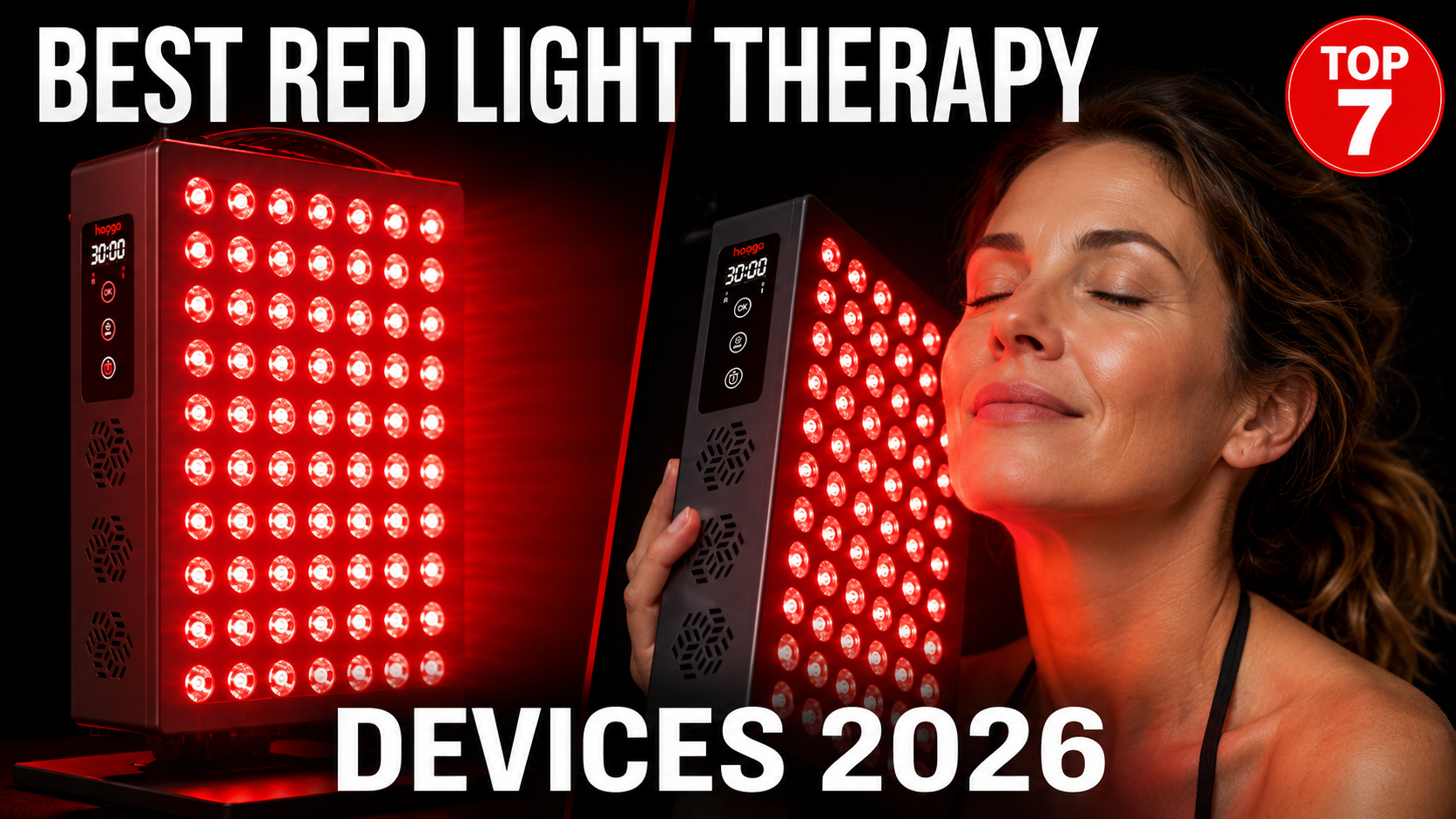
Red Light Therapy Body Map: What Works Where (2026)
Spread the love
Red light therapy is not one treatment. It is six different treatments wearing the same marketing copy. A device that rebuilds collagen on your face at 660nm will do almost nothing for the deep joint inflammation in your knee, and a near-infrared panel built to reach a shoulder muscle three centimeters under the skin is overkill — and often uncomfortable — for the thin skin around your eyes. Most buying guides skip this distinction entirely and treat “red light therapy” as a single category, which is how people end up with a $200 face mask pointed at their aching lower back and wondering why nothing changed.
Table of Contents
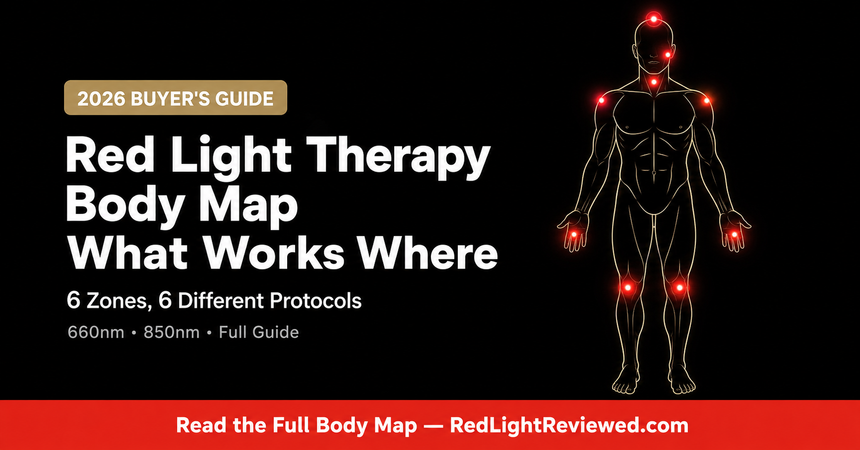
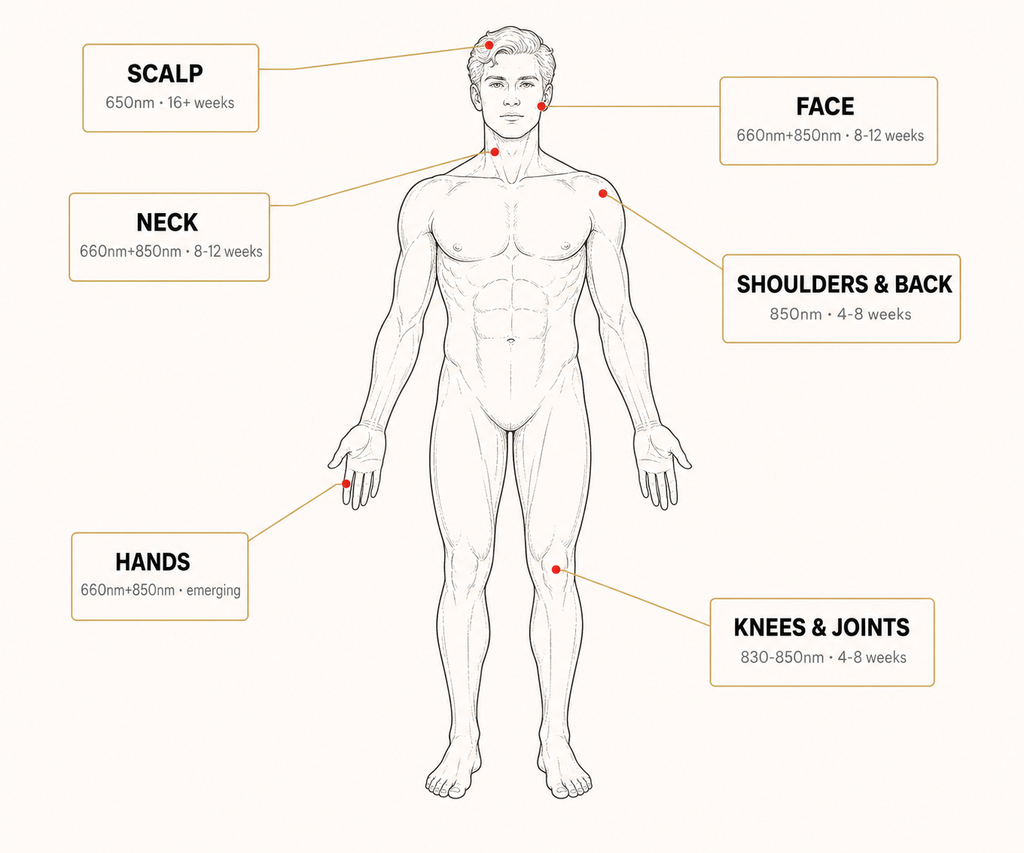
This guide breaks the body into six zones — scalp, face, neck and décolletage, shoulders and back, knees and joints, and hands — and matches each one to the wavelength, session length, and device type the research actually supports. If you already own a device, this will tell you whether you are using it correctly. If you are shopping for one, it will tell you which zone to solve for first.
Red Light Therapy Body Map
What Photobiomodulation Actually Does
Red and near-infrared light therapy — the clinical term is photobiomodulation — works by delivering specific wavelengths of light to mitochondria inside your cells. Mitochondria contain a light-sensitive enzyme called cytochrome c oxidase, and when it absorbs red or near-infrared photons, it produces more ATP, the molecule cells use as energy currency. More available ATP means cells can repair tissue, produce collagen, and reduce inflammatory signaling more efficiently. That is the mechanism in plain terms, and it is the same mechanism regardless of which body part you are treating.
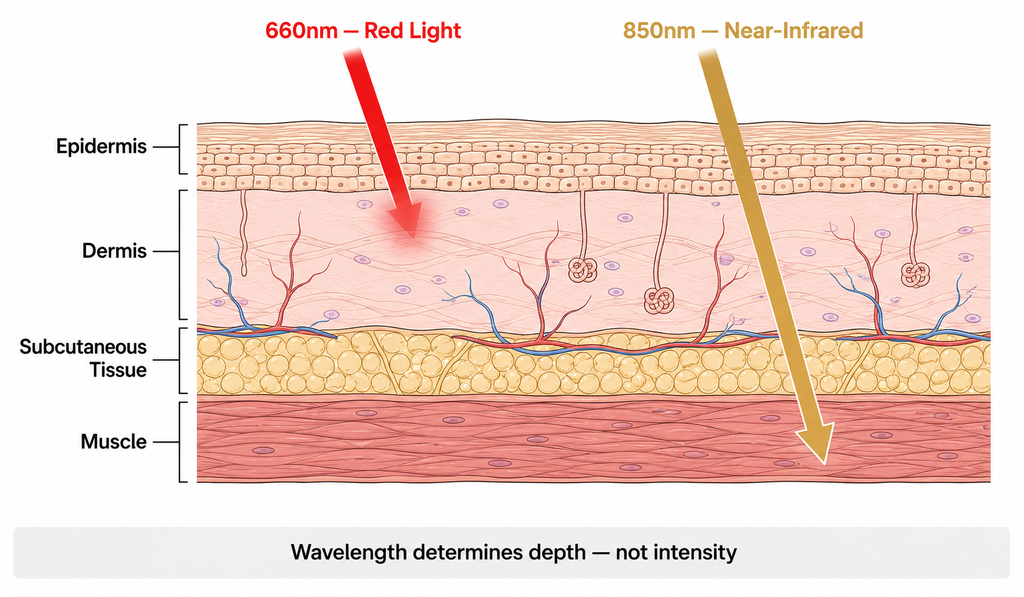
What changes by body part is depth. Visible red light in the 630–660nm range is absorbed quickly by skin and does most of its work in the epidermis and upper dermis — the layers responsible for collagen, fine lines, and surface texture. Near-infrared light in the 810–850nm range is largely invisible to the eye and penetrates several centimeters deeper, reaching muscle, connective tissue, and in some cases joint capsules. This is why a device built for facial skin and a device built for a sore shoulder are engineered differently, even when both are marketed under the same “red light therapy” umbrella.
What Photobiomodulation Actually Does
The evidence base is also uneven by zone. Research on skin applications (collagen synthesis, fine lines, wound healing) is relatively deep, with multiple randomized controlled trials. Evidence for musculoskeletal pain is strong enough that a Cochrane systematic review found benefit for chronic neck pain. Hair regrowth has FDA clearance for several consumer devices based on trials showing increased hair density. Circulation and skin-quality claims for hands are the least studied of the six zones — promising in small trials, but with less consensus than the other five.
There is a second variable that matters almost as much as wavelength: irradiance, or how much light energy actually lands on the tissue per second. A device can emit the correct wavelength and still underperform if the LEDs are too far from the skin, too few in number, or too weak individually. This is why two products can list identical “660nm/850nm” specs and produce noticeably different results — one may deliver two or three times the usable energy at the same distance. It’s also why distance matters more than most people assume: moving a panel from six inches to twelve inches away from skin can cut effective irradiance by more than half, because light intensity falls off sharply with distance. None of the zone recommendations below will work as described if the device is held too far away or used through thick clothing, both of which block a meaningful percentage of the light before it reaches skin.
Wavelength: 650nm red light is the standard for FDA-cleared hair devices; the light needs to reach hair follicles sitting just under the scalp surface, not deep tissue.
Session time: Most cleared devices run a fixed 10-minute session, used daily or near-daily.
Timeline to results: Clinical trials supporting FDA clearance for red light hair devices generally measure outcomes starting at 16 weeks of consistent use, with density improvements continuing through 24–26 weeks. This is the longest commitment window of any zone on this map, and it is the single biggest reason people quit too early and conclude the treatment “doesn’t work.”
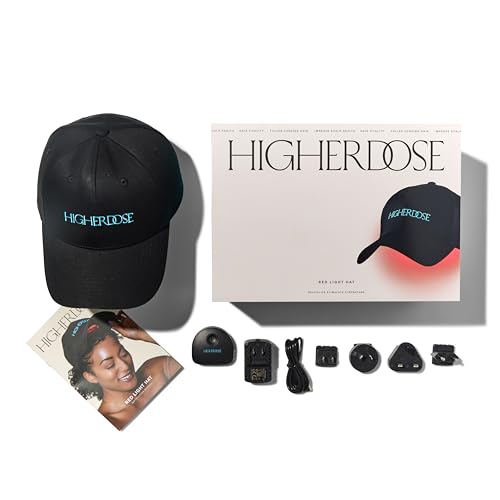
Best device type: A wearable cap or hat that holds LEDs at a consistent distance from the whole scalp beats a handheld comb or brush, because scalp coverage needs to be even — missed patches simply do not respond. The HigherDOSE Red Light Hat is FDA-cleared at 650nm, cordless, and designed for the fixed 10-minute daily protocol the clinical trials used — which matters more than LED count for this particular zone, since consistency is what drives the 16-week result window.
Face: Collagen, Fine Lines, and Texture
Wavelength: A combination of 630–660nm red light and 830–850nm near-infrared is the most common protocol in facial studies — red for surface collagen stimulation, near-infrared for deeper dermal support.
Session time: 10–20 minutes, 3–5 times per week for masks; some panel-based facial protocols run shorter, more frequent sessions.
Timeline to results: Facial skin responds faster than any other zone. Published trials on LED facial devices report measurable improvements in fine lines, texture, and skin firmness within 8–12 weeks, with collagen density increases in some studies reported in the range of 29–47% depending on protocol and study duration.
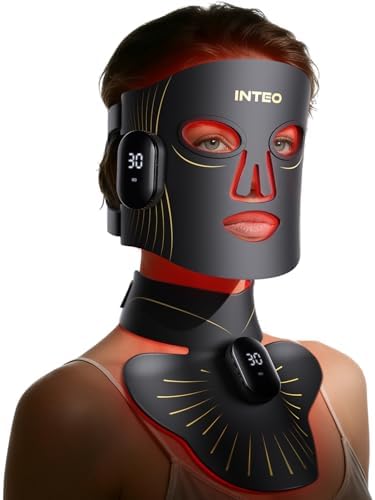
Best device type: A full-coverage silicone mask outperforms a spot-treatment wand for general anti-aging use, because it treats the whole face evenly in one session instead of requiring you to manually pass a wand over every region. The INTEO Face & Neck Mask combines 660nm red and 850nm near-infrared across 680 LEDs, which covers both ends of the facial wavelength protocol in a single cordless session — and its extended coverage down onto the neck solves the next zone at the same time.
Neck and Décolletage: The Most Skipped Zone
Wavelength: Same dual-wavelength approach as the face — 660nm for surface texture, 850nm for deeper support — but the neck and décolletage need it more, not less.
Session time: 10–20 minutes, matching the facial protocol.
Timeline to results: Skin laxity and crepiness in this area respond on a similar 8–12 week timeline to facial skin, but only if the area is actually being treated, which is the real issue here.
This is the zone people forget. Most facial masks stop at the jawline, which means the neck and chest — areas with thinner skin and fewer oil glands than the face, and therefore some of the first places visible aging shows up — get none of the treatment. If your mask design extends coverage down to the collarbone, as the INTEO mask referenced above does, you are solving two zones with one device. If it does not, the neck needs a separate short session with a flexible pad or panel to get equivalent exposure.
Shoulders and Back: Muscle Recovery
Wavelength: This is where near-infrared becomes the primary tool rather than a supporting one. 850nm penetrates far enough to reach muscle tissue, which red light alone cannot do as effectively.
Session time: 10–20 minutes per targeted area, though panels large enough to cover the full upper back may need multiple positioning passes to treat both shoulders.
Timeline to results: Post-exercise recovery studies show reduced measures of muscle damage (including creatine kinase, a blood marker of muscle stress) within days of near-infrared exposure following training. Cumulative benefits for chronic tension and soreness typically build over 4–8 weeks of consistent use.
Best device type: A stand-mounted panel with dual-wavelength output and enough surface area to cover the shoulder blades in one session is the practical choice for this zone, since back and shoulder muscles are large and awkward to treat with a small wand. The Comfytemp 55W High-Output Panel combines 660nm and 850nm on an adjustable stand that reaches up to 40 inches, which makes it possible to treat a seated or standing back without holding anything in place.
Knees and Joints: Pain Relief
Wavelength: Near-infrared (830–850nm) is essential here, since joint tissue sits deeper than muscle in most cases. A device that only emits 660nm red light will not do meaningful work on knee or joint pain regardless of session length.
Session time: 15–20 minutes per joint, most protocols recommend daily or near-daily use during an active flare-up, tapering to maintenance frequency afterward.
Timeline to results: A Cochrane systematic review — one of the more rigorous forms of evidence available — confirmed benefit for chronic neck pain specifically, and supporting trials on osteoarthritis show reduced morning stiffness and improved function, generally assessed over 4–8 weeks of consistent treatment. This is one of the better-evidenced zones on this map, alongside skin applications.
Best device type: Because knees, elbows, and other joints are curved and mobile, a flexible wearable pad that wraps and stays in place outperforms a flat panel you would otherwise need to hold against a moving joint for 15–20 minutes. The bonodave Red Light Therapy Pad is built specifically for this — it wraps around the knee, shoulder, or hand with an elastic strap and runs dual 660nm/850nm output through a corded controller.
Hands: Circulation and Skin Quality
Wavelength: Standard dual-wavelength (660nm/850nm) protocols apply, though this is the zone with the thinnest supporting evidence of the six.
Session time: 10–15 minutes is typical, often done while the hands rest flat or wrapped.
Timeline to results: Small trials on circulation and skin quality report early changes within a few weeks, but sample sizes here are smaller and less consistent than the face, joint, or hair research. Treat hand-specific claims with more skepticism than the other five zones — the underlying mechanism is sound, but the clinical case is still emerging.
Best device type: The same flexible wrap-style pad used for knees and joints works for hands, since it can be laid flat under or around them rather than requiring a dedicated hand-shaped device (a category that barely exists in the current market).
Matching Devices to Your Actual Goal
If you are trying to solve one specific problem, buy for that zone first rather than reaching for a full-body panel out of the gate:
Thinning hair or scalp health → a wearable cap built for the fixed 10-minute FDA-cleared protocol, used daily, with a 16-week minimum commitment before judging results.
Fine lines, uneven texture, or dullness → a full-coverage face mask with extended neck coverage, so you are not treating two zones with one device’s worth of budget.
Post-workout soreness or chronic upper-back tension → a stand-mounted panel large enough to cover the shoulder blades without repositioning every few minutes.
Knee, elbow, or joint pain → a flexible wearable pad that stays in place through movement, not a flat panel meant for stationary use.
General full-body maintenance across several zones → a combination approach is more realistic than expecting one device to do all six jobs well; a panel and a mask together typically outperform a single “does everything” device.
What the Research Actually Shows — and Doesn’t
It is worth being direct about where the evidence is strong and where it is still developing, because the affiliate-marketing version of this article would round every claim up to “clinically proven.” It shouldn’t.
Facial skin applications have the deepest research base, with multiple controlled trials on collagen and fine lines. Joint and musculoskeletal pain relief has strong support, including at least one Cochrane review — the closest thing to a gold standard in evidence review. Hair regrowth devices carry FDA clearance, which requires trial data, but clearance is a lower bar than “proven to work for everyone,” and results vary meaningfully by individual and by how consistently the 16-week protocol is followed. Circulation and hand-skin benefits are the weakest-evidenced of the six zones — plausible given the same underlying mechanism, but not yet backed by the volume of research the other zones have.
None of this means red light therapy is ineffective for hands or that hair regrowth is guaranteed. It means the confidence level should scale with the evidence, and a guide that tells you otherwise is selling, not informing.
Common Mistakes That Undo the Zone Map
Even with the right device pointed at the right zone, a handful of habits quietly cancel out the results — and they show up in roughly the same order every time someone switches from confused to consistent.
Treating through clothing. A thin cotton shirt can block a meaningful share of red and near-infrared light before it ever reaches skin. Every timeline in this guide assumes direct skin exposure. If you are using a panel over a shirt “because it’s more comfortable,” you are effectively running a shorter, weaker session than the one the research is based on.
Inconsistent distance. Panels and lamps are usually tested and rated at a specific distance from skin — often 6 inches. Sitting further back to fit more of your body in frame, or because the panel gets warm, reduces the irradiance reaching your skin more than most people expect, since light intensity drops off sharply with distance rather than in a straight line.
Judging results on the wrong timeline. This is the single most common reason people abandon a device that was actually working. Facial skin shows change in 8–12 weeks. Hair needs a full 16 weeks minimum before the trial data supports drawing conclusions. Applying a face-mask timeline to a scalp cap, or expecting joint pain to resolve in a week the way post-workout soreness might, sets an expectation the evidence never supported in the first place.
Skipping days and expecting the same curve. The clinical trials behind these timelines used daily or near-daily protocols. Using a device three times in the first week and then twice over the next month will not produce a compressed version of the 8-to-16-week results — it resets the clock, because the underlying cellular effect depends on repeated, regular exposure rather than total cumulative minutes.
Buying one device to solve six zones. A panel strong enough to reach shoulder muscle is usually more intense than facial skin needs for comfortable daily use, and a lightweight facial mask rarely has the near-infrared output to do anything meaningful for a knee. The zones in this guide aren’t marketing segmentation — they reflect genuinely different tissue depths, and a device optimized for one will underperform on another even if the wavelength numbers on the box look similar.
How the Body Map Fits Into a Broader Routine
Red light therapy works best as a layer inside an existing routine rather than a stand-alone fix, and the zone map above is meant to slot into whatever you’re already doing rather than replace it.
For skin-focused zones — face, neck, décolletage — treatment fits naturally after cleansing and before serum application, since clean, product-free skin lets more light reach the dermis without a barrier of moisturizer or SPF sitting on top. Many people run their face and neck session in the morning as part of a skincare routine and save joint or muscle sessions for evening, when soreness from the day’s activity is most noticeable.
For recovery-focused zones — shoulders, back, knees — timing around activity matters more than time of day. Using a panel or pad within a few hours after exercise, rather than the next morning, lines up with when post-exercise muscle stress markers are elevated and when the near-infrared recovery research shows the clearest effect.
Scalp treatment is the one zone where routine consistency matters more than routine placement. Because the 16-week timeline depends entirely on not missing sessions, it tends to work best anchored to an existing daily habit — during a morning coffee, while reading in bed, or during a commute if the device is cordless — rather than treated as a separate task to remember on its own.
None of these zones require professional supervision for a healthy adult using a consumer device as directed, but anyone with a photosensitivity condition, who is pregnant, or who is using medication that increases light sensitivity should talk to a doctor before starting any zone, not just the ones that seem more intensive.
Comparison at a Glance
The table below summarizes wavelength, session time, device type, and expected timeline for each zone covered in this guide.
Red Light Therapy Zone Map: Wavelength, Time & Timeline
How each body zone’s protocol differs — use this as a quick reference, not a substitute for the full explanation above.
← Scroll to see all →
Zone
Wavelength
Session Time
Best Device Type
Timeline to Results
ScalpHair regrowth
650nm Red
10 min / day
Wearable cap
16+ weeks
FaceCollagen, fine lines
660nm + 850nm
10–20 min, 3–5x/week
Full-coverage mask
8–12 weeks
Neck & DécolletageSkin laxity, texture
660nm + 850nm
10–20 min
Extended mask or flexible pad
8–12 weeks
Shoulders & BackMuscle recovery
850nm-led dual
10–20 min / area
Stand-mounted panel
4–8 weeks
Knees & JointsPain relief
830–850nm NIR
15–20 min / joint
Flexible wearable pad
4–8 weeks
HandsCirculation, skin quality
660nm + 850nm
10–15 min
Flexible wrap pad
Emerging evidence
A brief read on the table: near-infrared (850nm) becomes more important the deeper the target tissue sits — skin needs mostly red light, muscle and joints need near-infrared to do the real work, and the face/neck is really the only zone that benefits from both wavelengths running together in a single session.
Recommended Devices by Zone
Recommended Devices by Zone
One representative pick per zone, matched to the wavelength and format the research supports.
Common questions about matching red light therapy devices to specific body zones.
Technically yes, but with real trade-offs. A panel strong enough to reach muscle at 850nm is often too intense for the delicate skin on your face for daily use, while a lightweight facial mask usually lacks the near-infrared output needed for a knee or shoulder. Most people get better results using a panel or pad for large muscle/joint zones and a dedicated mask for the face and neck.
Buying Decision
Hair follicles cycle through growth phases that take months, not weeks, so the clinical trials behind FDA-cleared hair devices measure outcomes starting at 16 weeks of consistent daily use. Skin cells turn over much faster, which is why facial results are typically visible within 8–12 weeks under the same kind of protocol.
Results / Timeline
Not effectively. Fabric blocks a meaningful percentage of red and near-infrared light before it reaches skin, which reduces the usable dose well below what clinical protocols used. Every timeline in this guide assumes direct skin exposure.
Safety
660nm is visible red light that’s absorbed quickly by skin, making it well-suited to surface concerns like fine lines and texture. 850nm is near-infrared, mostly invisible to the eye, and penetrates several centimeters deeper — reaching muscle and, in some cases, joint tissue. Deeper targets need more 850nm; surface targets need more 660nm.
Science / Evidence
Most panels and lamps are rated at a specific distance, often around 6 inches. Light intensity falls off sharply as distance increases, so moving a device further away to fit more of your body in frame can significantly reduce the effective dose reaching your skin, even if the session length stays the same.
Science / Evidence
It’s one of the better-evidenced applications in this category. A Cochrane systematic review — a rigorous, independent form of evidence review — found benefit for chronic neck pain specifically, and supporting trials on osteoarthritis report reduced stiffness and improved function over 4–8 weeks of consistent use.
Science / Evidence
The timelines in this guide come from trials that used daily or near-daily protocols. Skipping sessions doesn’t just slow progress proportionally — the cellular effect depends on repeated, regular exposure, so inconsistent use tends to reset progress rather than simply stretch the timeline.
Usage / Routine
For most healthy adults, daily use within the manufacturer’s recommended session length is considered low-risk. Anyone with a photosensitivity condition, who is pregnant, or who takes medication that increases light sensitivity should check with a doctor before starting any zone, since individual circumstances can change the risk profile.
Safety
Start with the zone bothering you mostMatch the device to the depth of what you’re actually treating.
Red light therapy works differently depending on where you point it, and the biggest mistake in this category isn’t buying a bad device — it’s buying the right device for the wrong zone, or expecting a face-mask timeline (8–12 weeks) from a hair-regrowth protocol that needs 16. Match the wavelength to the depth of what you’re actually treating, commit to the session length and frequency the research used, and give each zone the timeline its evidence actually supports before deciding whether it’s working.
⚠️ Affiliate Disclosure: This article contains affiliate links. If you purchase through our links, we may earn a commission at no extra cost to you. We only recommend products we have thoroughly researched.