Red Light Therapy Dosing: The Complete Cheat Sheet by Goal
Spread the love
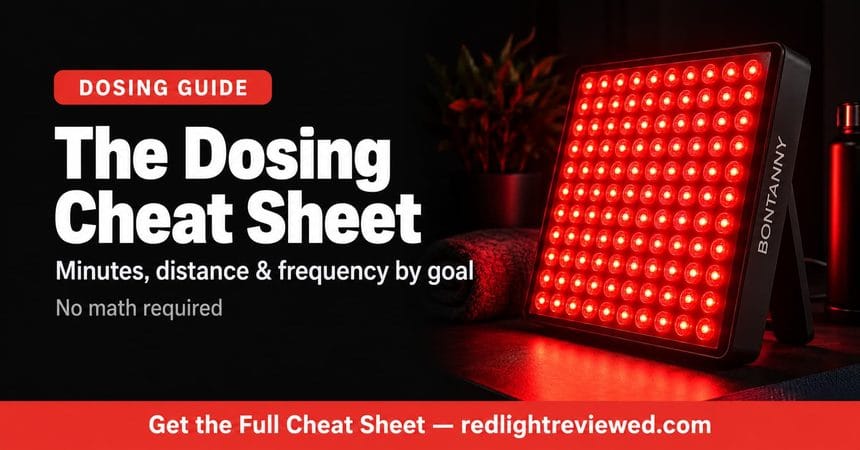
Get red light therapy dosing wrong and it doesn’t matter how good your device is — you’ll either underwhelm your results or waste weeks of sessions that were never strong enough to do anything. The same panel can be genuinely effective for one person and completely useless for another, and the difference usually isn’t the device. It’s how far they sat from it, how long they stayed there, and how often they showed up. This cheat sheet breaks dosing down into three numbers anyone can use, then gives you the actual minutes, distance, and frequency ranges researchers use for skin, pain, and hair — no calculator required.
Table of Contents
Why Dosing Is the Variable Most People Get Wrong
Most red light therapy guidance stops at “use it a few times a week,” which is true but almost useless on its own. Two people can follow that exact advice with a mask or panel and get completely different outcomes, because “a few times a week” says nothing about how much light energy actually reached their skin in each session.
The two most common mistakes go in opposite directions. Underdosing happens when someone sits too far from the device, or cuts sessions short, and never delivers enough light energy to trigger a meaningful cellular response — weeks go by and nothing changes, not because red light therapy doesn’t work, but because the dose was too low to matter. Overdosing is less common but real: sitting too close for too long doesn’t accelerate results, because photobiomodulation follows a dose-response curve where effectiveness rises, plateaus, and can decline past a certain point. Getting dosing right isn’t about maximizing exposure — it’s about landing in the range that’s actually been shown to do something.
The Three Numbers That Actually Matter: Irradiance, Time, and Distance
Every dosing question ultimately comes down to one formula: dose (J/cm²) = irradiance (mW/cm²) × time (seconds) ÷ 1,000. You don’t need to run this calculation yourself, but understanding what it means makes every other part of this guide make sense.
Irradiance is how much light power is actually hitting your skin, measured in milliwatts per square centimeter (mW/cm²). This is where manufacturer marketing gets slippery: irradiance numbers on a product listing are almost always measured directly at the LED surface, not at the distance you’ll actually be sitting. A panel that claims 100 mW/cm² might deliver half that at 6 inches away — which is one reason two devices with identical spec sheets can perform very differently in real use.
Time is simply how long you stay in front of the device, and it’s the variable people adjust most instinctively — but it only matters in combination with irradiance and distance, not on its own.
Distance is the variable most people ignore, and it’s arguably the most powerful one. Light intensity falls off sharply as you move away from the source — physics known as the inverse-square law — which means moving from 6 inches to 12 inches away doesn’t cut your dose in half, it can cut it by 75% or more. A “10-minute session” at 6 inches and a “10-minute session” at 18 inches are not remotely the same dose, even though the time on the clock is identical.
Put together, these three numbers produce your actual dose in joules per square centimeter (J/cm²) — the number that determines whether a session was strong enough to matter, or too weak to do much of anything.
What to Look For: Getting the Variables Right
Match your wavelength to your goal first. Dosing only matters if you’re using the right type of light to begin with. Red light in the 630–660nm range works primarily at the skin’s surface, while near-infrared light around 810–850nm reaches deeper into muscle and joint tissue. Using the wrong wavelength range for your goal means even a “correct” dose won’t produce the result you’re after.
Treat manufacturer irradiance claims skeptically. Because these numbers are typically measured at the LED surface rather than at a realistic treatment distance, the safest approach is to follow the specific minutes-and-distance instructions that came with your device rather than trying to hit a generic J/cm² target yourself — those instructions already account for your device’s real-world output.
Distance is your biggest lever, not time. If a session doesn’t seem to be doing anything, the fix is usually “sit closer,” not “sit longer.” Most consumer panels are designed to deliver an effective dose within 6 to 12 inches; sitting further away than your device’s instructions recommend is one of the most common reasons people don’t see results even with regular use.
Frequency compounds dose over time. A single strong session matters far less than several moderate sessions spread across a week, because the biological response — increased mitochondrial ATP production, gradual collagen remodeling — depends on repeated stimulation, not one large exposure. Most published protocols use three to five sessions per week, and daily use is generally well tolerated at moderate doses for skin and pain applications specifically.
Red Light vs. Near-Infrared: Quick Reference
Wavelength determines how deep the light reaches — and which goals it’s actually suited for.
← Scroll to see all →
Wavelength
Penetration Depth
Best Suited For
Red Light (630–660nm)
~1–3cm (skin surface, upper dermis)
Skin tone, texture, acne, mild inflammation
Near-Infrared (810–850nm)
Several cm deeper (muscle, joint tissue)
Muscle recovery, joint pain, deeper tissue support
Combination Devices
Both ranges together
Full-body panels, some premium masks
Red Light Therapy Dosing by Goal
The ranges below reflect what’s commonly used across published research and consumer device guidance for each application. Treat them as an educational starting point, not a substitute for your specific device’s instructions — always defer to your manufacturer’s recommended distance and time if the two conflict.
Skin & Anti-Aging
Skin protocols aimed at collagen and texture typically target 4–12 J/cm² per session, delivered over 10–15 minutes at 6–12 inches from the device. Three to five sessions per week is the range most consistently used in the collagen-remodeling studies referenced in our red light therapy results timeline guide, where structural changes became measurable around the 8–12 week mark.
Acne & Inflammation
Acne-focused sessions generally sit at the lower end of the skin dosing range, since the goal is calming inflammation rather than driving deep collagen remodeling. Short daily or near-daily sessions at a moderate distance tend to outperform longer, less frequent ones for this specific goal, since inflammation responds well to gentle, repeated stimulation.
Muscle Recovery & Sports Use
Recovery-focused dosing runs higher, typically 10–30 J/cm² per session, delivered over 10–20 minutes at 2–6 inches — noticeably closer than skin protocols, since near-infrared light needs to reach deeper tissue. Sessions are commonly timed immediately before or after a workout rather than on a fixed daily schedule.
Joint & Chronic Pain
Deeper, more persistent discomfort tends to call for the higher end of the recovery range, sometimes 20–50+ J/cm² per area, closer to the device and occasionally with longer sessions — though this is also where individual tolerance and device-specific guidance matter most, since going too high too fast doesn’t accelerate relief and can just mean an uncomfortably close, uncomfortably long session for no extra benefit.
Hair & Scalp
Scalp devices are typically pre-calibrated by the manufacturer for a specific dose at a fixed distance (since hats and combs sit directly against the scalp), so the dosing variable that matters most here is frequency and duration, not distance. Most protocols use 10–20 minute sessions, three times a week, sustained over months rather than weeks — see our red light therapy results timeline for why hair specifically takes 12–24 weeks to show visible change.
Still not sure which device and dose actually fits your specific goal? Our red light therapy device quiz matches you to a device and builds a realistic session plan around your answers in under a minute.
Red Light Therapy Dosing Cheat Sheet
General starting ranges by goal — always defer to your device’s own instructions if they differ.
← Scroll to see all →
Goal
Distance
Time
Frequency
Approx. Dose
Skin & Anti-Aging
6–12 in
10–15 min
3–5x/week
4–12 J/cm²
Acne & Inflammation
6–12 in
8–12 min
Daily–5x/week
Lower end of skin range
Muscle Recovery
2–6 in
10–20 min
Pre/post workout
10–30 J/cm²
Joint / Chronic Pain
2–6 in
10–20 min
3–5x/week
20–50+ J/cm²
Hair & Scalp
Device-fixed
10–20 min
3x/week
Per manufacturer
What the Research Actually Shows
It’s worth being honest about the limits of a dosing chart like this one. Different light meters can produce readings that vary by 30% or more for the same device, published protocols vary considerably between studies and devices, and individual factors — skin tone, tissue depth, device quality — all shift where the “right” dose actually lands for any one person. The ranges in this guide describe what’s commonly used across published research and reputable manufacturer guidance; they’re an educated starting point, not a personalized medical prescription.
What is well-established is the underlying principle: dose follows a biphasic response curve, meaning there’s a real therapeutic window where more light helps, up to a point, after which more stops helping and can even work against you. That’s the single most useful thing to take from the dosing literature — not a precise number, but the shape of the curve itself.
A Simple Way to Get This Right Without Doing Math
If none of the J/cm² math above feels usable in practice, here’s the shortcut: follow your specific device’s recommended distance and time exactly as written, stay consistent with frequency (three to five sessions a week for most goals), and resist the temptation to sit closer or stay longer than instructed in the belief that it’ll speed things up — it won’t, and it may do the opposite. The manufacturer’s instructions already account for that specific device’s real-world irradiance, which is more reliable than any generic chart, including this one.
Red light therapy devices are not intended to diagnose, prevent, or treat any medical condition. Individual results may vary. Consult a healthcare provider before starting any new health regimen.
Worried about doing too much? Our guide to red light therapy side effects explains overuse, eye safety and who should check with a doctor first.
Frequently Asked Questions
Common questions about red light therapy dosing.
Dose (J/cm²) equals irradiance (mW/cm²) multiplied by session time in seconds, divided by 1,000. In practice, you don’t need to calculate this yourself — following your device’s recommended distance and time already delivers a dose within the researched range for its intended use.
Science / Evidence
Most consumer panels are designed for 6 to 12 inches for skin applications, and 2 to 6 inches for muscle or joint recovery, where near-infrared light needs to reach deeper tissue. Always check your specific device’s manual, since output varies significantly between products.
Usage / Routine
Not beyond your device’s recommended range. Dosing follows a biphasic response curve, meaning there’s a therapeutic window where more light helps — but going past it doesn’t add benefit, and can work against the very effect you’re going for.
Safety
Treat them cautiously. These figures are typically measured directly at the LED surface, not at a realistic treatment distance, so real-world output at 6–12 inches away is usually lower than the advertised number. Follow the device’s specific distance and time instructions instead.
Science / Evidence
No. Skin protocols generally use lower doses (roughly 4–12 J/cm²) at a greater distance, while muscle and joint recovery protocols use higher doses (roughly 10–30+ J/cm²) at a closer distance, since near-infrared light needs more energy to reach deeper tissue.
Results / Timeline
Use the cheat sheet ranges above as a starting point for your specific goal, and stay conservative — a shorter session at the recommended distance is safer than guessing at a higher dose. Consistency across several sessions a week matters more than getting the exact number perfect.
Usage / Routine
Not sure which device fits your goal?Take our free 60-second quiz and get a personalized dosing plan.
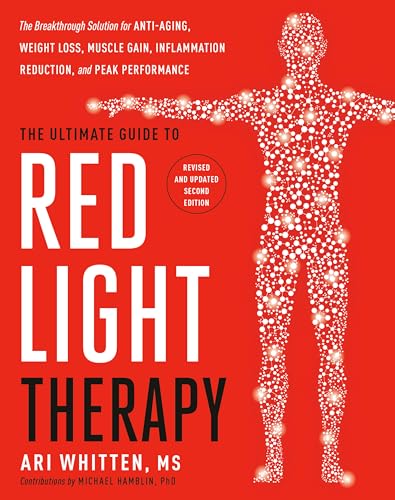
For a deeper, device-by-device breakdown of dosing across every wavelength and goal, Ari Whitten’s The Ultimate Guide to Red Light Therapy remains the most thorough consumer resource we’ve found — check the current price on Amazon.