Red Light Therapy Results Timeline: What to Really Expect
Spread the love
If you’ve just started red light therapy — or you’re about to — the honest answer to “how long until I see results” is: it depends entirely on what you’re treating. The red light therapy results timeline for skin glow looks nothing like the timeline for hair regrowth, and both look nothing like the timeline for muscle recovery. Most people quit somewhere between week two and week six, right before the biological process they’re actually waiting on has had time to complete. This guide breaks down what’s realistic to expect, week by week, for each of the most common goals — and what the research actually shows about why it takes as long as it does.
Table of Contents
Why Timeline Expectations Matter More Than People Think
Red light therapy is not a switch you flip. Unlike a topical product that sits on the skin, photobiomodulation works by triggering a cascade of cellular events that unfold over days and weeks, not minutes. The problem is that most people’s mental model comes from skincare marketing, where “results” often means an immediate, visible change — a serum that plumps skin on contact, a mask that leaves an instant glow.
Red light therapy doesn’t work that way, and treating it like it should is the single biggest reason people abandon a device before it’s had a fair chance. Understanding the real red light therapy results timeline isn’t just a curiosity — it’s what determines whether you stick with a routine long enough to actually benefit from it, or give up in week three convinced the device “doesn’t work.”
The Core Mechanism: Why Results Build Over Time
Red light and near-infrared light work by being absorbed by a mitochondrial enzyme called cytochrome c oxidase. This absorption increases mitochondrial ATP production — essentially giving cells more energy to do repair work — while also shifting the cell’s internal redox balance in a way that activates genes involved in tissue regeneration and repair.
That gene activation is the reason results take time. A single session can trigger the process, but visible outcomes depend on what your body does with that signal over the following days: fibroblasts gradually increasing collagen output, matrix metalloproteinase-1 (MMP-1) remodeling existing collagen structure, or, in the case of hair follicles, dormant follicles slowly shifting back into an active growth phase. None of that happens instantly. It’s cumulative — each session adds a small amount of stimulation, and the visible result is the sum of many sessions, not any single one.
This is also why consistency matters more than intensity. A longer session done once a week does not substitute for shorter sessions done consistently several times a week, because the biological response depends on repeated stimulation over time, not total light exposure in a single sitting.
Key Variables That Affect Your Timeline
Before getting into goal-by-goal timelines, it helps to understand what actually speeds up or slows down your results — because the same device can produce very different timelines for two different people.
Session frequency. Most clinical protocols for skin and pain use three to five sessions per week. Fewer sessions stretch the timeline; daily use (within the device’s recommended limits) can modestly shorten it for some goals, particularly wound healing and inflammation.
Wavelength and power. Red light (roughly 620–660nm) works primarily at the skin’s surface, while near-infrared light (roughly 810–850nm) reaches deeper tissue. A device using the wrong wavelength range for your goal — near-infrared for surface skin concerns, or red light alone for deep muscle recovery — will take longer to show results, if it shows them at all. Irradiance (the light’s intensity, measured in mW/cm²) also matters: underpowered devices need longer sessions or more sessions per week to deliver an equivalent dose.
Treatment area and goal. Skin concerns tied to surface-level circulation change faster than concerns tied to structural collagen remodeling. Hair growth is slower than both, because it depends on shifting the hair follicle’s growth cycle, not just stimulating existing tissue.
Dose isn’t “more is better.” Photobiomodulation follows what researchers call a biphasic dose-response curve — a therapeutic window where effectiveness rises with dose, then plateaus and can even decline if sessions run too long or too close together. Going over your device’s recommended session length doesn’t accelerate your timeline; it can actually work against you.
Individual biology. Age, baseline skin condition, circulation, and even how consistently you’re able to stick to a routine all influence where you land within the ranges below. Timelines are ranges for a reason — individual results vary.
The Red Light Therapy Timeline by Goal
How long each outcome typically takes with consistent, several-times-weekly use.
← Scroll to see all →
Goal
First Signs
Visible Results
Full Results
Skin Glow & Circulation
Immediate
1–2 weeks
2–4 weeks
Acne & Inflammation
1–2 weeks
2–4 weeks
6–8 weeks
Anti-Aging & WrinklesSLOWEST SKIN GOAL
3–4 weeks
8–12 weeks
12+ weeks
Muscle Recovery
Days
1–2 weeks
2–4 weeks
Joint Pain
1–2 weeks
3–4 weeks
4–8 weeks
Hair GrowthSLOWEST OVERALL
8–12 weeks
12–16 weeks
16–24 weeks
Skin Glow and Circulation (Immediate to 2 Weeks)
This is the fastest-responding outcome, and the one most likely to create unrealistic expectations for everything else. Increased blood flow to the treated area can produce a visible, if temporary, glow almost immediately after a session. Within the first one to two weeks of consistent use, many people notice calmer-looking skin and a more even tone, largely due to reduced surface inflammation and improved circulation — not yet structural change.
Acne and Inflammation (2–4 Weeks)
Red light’s anti-inflammatory effect on the skin tends to show up faster than its collagen-building effect. Most people using red light consistently for acne-related concerns start noticing calmer, less reactive skin within two to four weeks. This is also typically when combination red-and-blue light devices start showing a visible reduction in active breakouts, since blue light’s antibacterial action compounds with red light’s anti-inflammatory effect over this window.
Anti-Aging and Wrinkle Reduction (8–12 Weeks and Beyond)
This is where the collagen-remodeling mechanism described above really comes into play — and it’s the clearest illustration of why the red light therapy results timeline for anti-aging is measured in months, not weeks. One study using 660nm LED phototherapy for photoaged skin took biopsies at 12 weeks and found a statistically significant 35% increase in type I collagen fiber density compared to a sham-treated control group, alongside clinically confirmed reductions in wrinkle depth. Another controlled study using biweekly treatments over nine weeks found statistically significant improvements in periorbital wrinkles and skin roughness versus sham controls.
The pattern across this research is consistent: measurable structural change in collagen density takes roughly 8 to 12 weeks of consistent treatment to become detectable, and the visible softening of fine lines tends to lag slightly behind the biopsy-confirmed collagen changes. If you’re chasing wrinkle reduction specifically, three months is a more honest benchmark than three weeks.
Muscle Recovery and Joint Pain (1–4 Weeks)
Near-infrared light’s deeper tissue penetration means pain-related outcomes often move faster than skin structural changes, but they’re highly use-case dependent. Post-workout muscle soreness and circulation-related discomfort can respond within days to two weeks of consistent post-exercise use, since the mechanism here overlaps heavily with the inflammation-reduction pathway. Chronic joint discomfort tends to sit on the longer end of that range, often needing three to four weeks of regular sessions before the improvement feels reliable rather than incidental.
Hair Growth (12–24 Weeks)
Hair is the slowest-responding goal on this list, and for good reason: red light therapy for hair loss works by nudging dormant follicles back into an active growth phase, and hair simply grows slowly. A multicenter, randomized, sham-controlled study published in the American Journal of Clinical Dermatology treated participants three times a week for 26 weeks and measured terminal hair density at 16 and 26 weeks specifically because earlier measurements weren’t considered meaningful. Most manufacturers and clinical sources place visible results for red light therapy hair devices somewhere between 12 and 24 weeks of consistent, several-times-weekly use — with the first noticeable sign typically being reduced shedding, followed later by visible thickening. If you start a red light hat or comb expecting results in a month, you’re very likely to quit right before the follicles you’re targeting would have responded.
What the Research Actually Shows
Typical Clinical Protocol Parameters
Ranges most commonly used across published photobiomodulation research.
← Scroll to see all →
Parameter
Typical Range
💡 Skin & Anti-Aging
Wavelength
630–660nm (surface) or 810–850nm (deeper dermis)
Irradiance
10–50 mW/cm²
Session frequency
3–5x per week
Study duration to measure change
8–12 weeks
💡 Pain & Muscle Recovery
Wavelength
810–850nm (near-infrared, deeper penetration)
Session frequency
3–5x per week, or post-activity
Time to first change
Days to 2 weeks
💡 Hair Growth
Session frequency
3x per week (per Jimenez et al., 2014)
Study duration
16–26 weeks
Measurement points
Baseline, then 16 and 26 weeks
It’s worth being upfront about the state of the evidence: most photobiomodulation research consists of small to mid-sized clinical trials, and study designs, devices, and dosing protocols vary considerably from one study to the next, which makes exact timelines somewhat approximate rather than universally fixed. That said, a consistent pattern shows up across the better-controlled trials — the parameters summarized in the table below reflect the ranges most commonly used in published research for skin, pain, and hair outcomes.
The honest takeaway is that the mechanism is well-supported at a cellular level (increased mitochondrial ATP production, activation of tissue-repair gene pathways), and the downstream outcomes — collagen density, hair follicle density, inflammatory markers — have been measured in controlled trials with statistically significant results versus sham devices. What’s less standardized is the exact number of weeks any individual will take to notice a given outcome, which is why every range in this guide is presented as a range, not a promise.
Getting the Most Out of Your Timeline
A few practical takeaways follow directly from the mechanism above. Consistency beats intensity — three to five shorter sessions a week will outperform one long session, because the biological response depends on repeated stimulation. Match your device to your goal — a face mask won’t meaningfully help joint pain, and a body panel isn’t optimized for facial skin concerns; if you’re not sure which type of device fits your goal, our red light therapy device quiz matches you to a specific device and builds a realistic usage plan around it in under a minute. And resist the urge to extend sessions beyond what your device recommends — given the biphasic dose-response curve described above, more time per session doesn’t shorten your timeline, it can just push you past the point where the effect starts to plateau.
If you’re still deciding which type of device makes sense for your goal, our full guide on how to choose a red light therapy device walks through the differences between masks, panels, and targeted devices in more depth.
The Bottom Line
There’s no single answer to “how long does red light therapy take to work” — the honest red light therapy results timeline depends entirely on what you’re treating, ranging from near-immediate circulation effects to a 12-to-24-week process for hair growth. What the research consistently shows is that this isn’t a fast fix, and it isn’t a placebo either: the mechanism is real, the outcomes are measurable in controlled studies, and the timeline is simply the price of a process that works at the level of gene expression and tissue remodeling rather than surface application. Give it the weeks the science says it needs before deciding whether it’s working for you.
Red light therapy devices are not intended to diagnose, prevent, or treat any medical condition. Individual results may vary. Consult a healthcare provider before starting any new health regimen.
Want to Go Deeper on the Science?
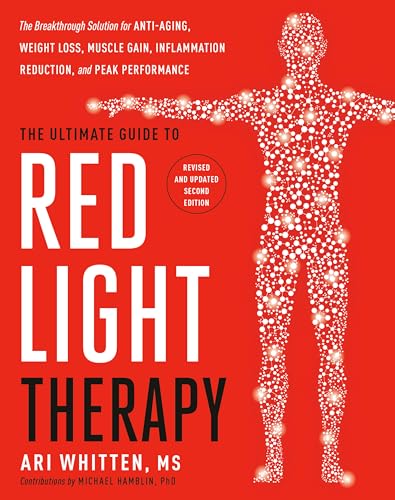
If you want a more complete breakdown of dosing, wavelengths, and how to build a routine around your specific goal, Ari Whitten’s The Ultimate Guide to Red Light Therapy is the most thorough consumer-level resource we’ve found on the subject — check the current price on Amazon.
Common questions about the red light therapy results timeline.
It depends on the goal. Skin circulation effects can appear immediately, acne and inflammation improvements usually show within 2–4 weeks, anti-aging and collagen changes take 8–12 weeks, and hair growth typically needs 12–24 weeks of consistent use.
Results / Timeline
Two weeks is often too early for structural outcomes like wrinkle reduction or hair growth, which depend on collagen remodeling or follicle cycling — processes that take 8+ weeks to become measurable. Inconsistent sessions can also stretch the timeline significantly.
Safety
No. Photobiomodulation follows a biphasic dose-response curve — going beyond your device’s recommended session length doesn’t accelerate results and can push you past the point where the effect plateaus. Consistency matters more than session length.
Usage / Routine
No. Wavelength, irradiance (power), and whether the device is designed for your specific goal all affect how quickly you’ll see results. A device using the wrong wavelength range for your goal may take much longer to show any effect.
Science / Evidence
Hair growth. Because it depends on shifting dormant follicles into an active growth phase, clinical trials typically measure results at 16 and 26 weeks rather than earlier — hair simply grows on a slower biological clock than skin or muscle tissue.
Results / Timeline
Most maintenance protocols recommend continuing at a reduced frequency (often 2–3x per week) once initial results appear, since the underlying biological effects — collagen turnover, follicle cycling — are ongoing processes, not one-time fixes.
Usage / Routine
Not sure which device fits your timeline?Take our free 60-second quiz and get matched to your goal.