Red Light Therapy for Lower Back Pain: Step-by-Step Guide
Spread the love
If you’ve searched for red light therapy for lower back pain, you’re probably past the “does this actually work” stage and into “how do I actually do this correctly.” That’s the right question. Red light therapy is forgiving in the sense that it’s very hard to hurt yourself with it, but it’s also easy to use it wrong in ways that simply mean you get no benefit at all — wrong distance, wrong session length, or expecting results on a timeline the tissue can’t deliver. This guide walks through the mechanics of using it properly, what realistic timelines look like, and which device format actually makes sense for lumbar use versus what’s just marketed that way.
Does Red Light Therapy Actually Work for Lower Back Pain?
Lower back pain is rarely one thing. It can be muscular tension from sitting, an inflamed joint, a mildly irritated nerve root, or simply accumulated strain from posture and repetitive movement. Red light therapy, more precisely called photobiomodulation, doesn’t diagnose or fix the underlying structural cause — a herniated disc doesn’t un-herniate because of light exposure. What it does is influence the cellular environment around the affected tissue: reducing local inflammation, supporting blood flow, and giving muscles a better environment to recover in.
That distinction matters because it sets realistic expectations. This is a supportive, non-invasive tool that many people find genuinely useful as part of a broader routine — not a replacement for movement, physical therapy, or medical evaluation when pain is severe, sudden, or accompanied by numbness or weakness down the leg.
How Red Light Therapy Works on Muscle and Joint Tissue
Photobiomodulation devices emit light in the red (approximately 630–660nm) and near-infrared (810–850nm) spectrum. Red light works mostly at the skin surface; near-infrared light penetrates several centimeters deeper, which is why devices marketed for musculoskeletal pain almost always pair both wavelengths — red for surface circulation, near-infrared for the muscle and joint tissue underneath.
At the cellular level, this light is absorbed by mitochondria, the energy-producing structures inside cells, in a process that appears to increase ATP production and modestly reduce inflammatory signaling. A recent systematic review pooling roughly 2,800 patients across musculoskeletal conditions — including knee osteoarthritis, tendinopathy, and low back pain — found that photobiomodulation therapy reduced average pain scores by about 32% across the included trials. That’s a meaningful average effect, though it blends multiple conditions together rather than isolating low back pain specifically, which is a distinction worth keeping in mind.
How to Use Red Light Therapy for Lower Back Pain, Step by Step
Step 1: Choose a device format that actually fits the lumbar region
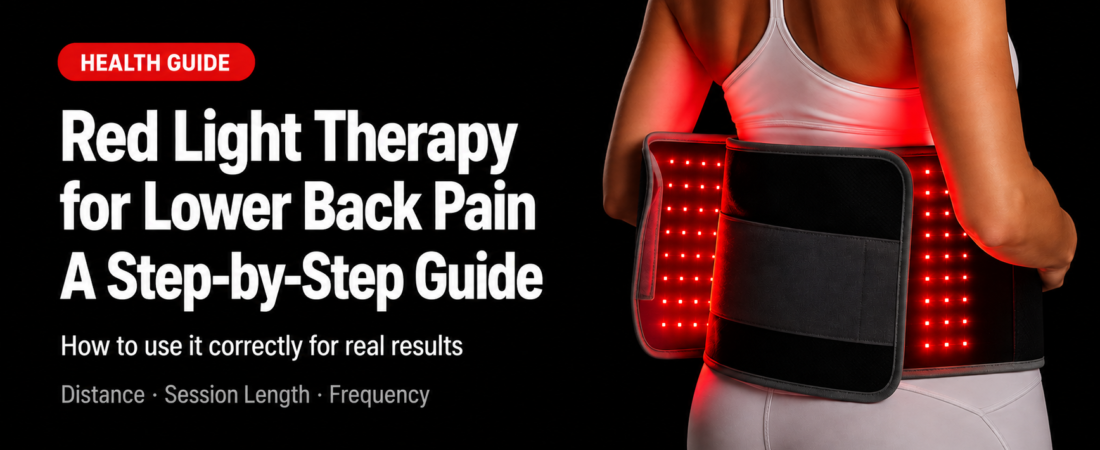
Not every red light device is well suited to the lower back. A small facial panel or handheld wand technically emits the right wavelengths, but poor coverage means you’d need to reposition it constantly to treat the whole affected area. For lumbar use specifically, you want either a flexible wrap that contours to the curve of your lower back, a dedicated belt, or a larger stationary panel you can lie or sit in front of. We break down the tradeoffs between these three formats later in this guide.
Step 2: Position the device at the correct distance
Deeper tissues and pain conditions generally respond to higher irradiance, in the range of roughly 25 to 150 mW/cm² at the skin, which typically means positioning the device closer than you would for facial skin. For wraps and belts that sit directly against clothing or skin, this isn’t something you need to calculate — near-contact is the design intent. For a stationary panel, most practitioner guidance recommends 4 to 6 inches for maximum deep tissue penetration, since near-infrared light loses effectiveness with distance faster than visible red. Better Life Lab
Step 3: Set session length and frequency
For most home users, this generally translates to 10 to 20 minute sessions, 3 to 5 times per week, though wearable wraps designed for close, direct contact often reach an effective dose faster than a panel positioned further away. Sessions typically run between 5 and 20 minutes per body area, and exposing skin for excessively long periods can lead to mild thermal effects like transient redness — more isn’t better here. If your device has a built-in timer, use it rather than guessing.
Step 4: Track your first two weeks honestly
Keep a simple note of pain level before and after sessions, and how you feel the following morning. This isn’t about journaling for its own sake — it’s the only way to tell whether the timeline below is playing out for you, or whether you should reassess distance, frequency, or whether red light therapy is the right tool for what you’re dealing with.
What to Expect Week by Week
Nobody should expect dramatic relief after one session. A more realistic timeline, based on how photobiomodulation trials are typically structured:
Weeks 1–2: Many people notice a subjective sense of warmth, relaxation, or reduced muscle tightness immediately after sessions, though this is partly just the physical sensation of the light and any accompanying heat, not necessarily the therapeutic mechanism at work yet.
Weeks 3–4: This is typically when consistent users start reporting more durable changes — less morning stiffness, fewer flare-ups after long periods of sitting. Trial protocols for non-specific low back pain commonly use a schedule of three sessions per week over two to four weeks before assessing outcomes, which lines up with what most people should expect before judging whether it’s working.
Weeks 5+: If you haven’t noticed any change by this point at a consistent frequency, it’s reasonable to reassess — either the distance/dose, or whether the underlying cause of your pain needs a different kind of intervention entirely.
Who Benefits Most From At-Home Red Light Therapy
This tool tends to fit best for people managing chronic, non-specific lower back tension — the kind that builds from desk work, standing jobs, or general muscular fatigue rather than an acute injury. It’s also commonly used by people recovering from workouts who want to reduce next-day soreness in the lumbar region, and by older adults managing ongoing joint stiffness who want a low-effort, non-pharmacological addition to their routine.
It’s a poorer fit as a standalone solution for acute injuries, radiating nerve pain, or any pain accompanied by red-flag symptoms like fever, unexplained weight loss, or loss of bladder control — those need medical evaluation, not a light panel.
What the Research Actually Shows
This is the section where honesty matters more than optimism. The evidence on photobiomodulation for low back pain specifically is genuinely mixed, and a good buying guide shouldn’t pretend otherwise.
On one side, a systematic review and meta-analysis of randomized controlled trials found low-level laser therapy effective for nonspecific chronic low back pain, and the broader musculoskeletal review cited earlier found a meaningful average pain reduction across conditions. On the other side, a systematic review of twelve randomized trials with a pooled sample of over 1,000 patients found that, compared with sham treatment, the effect of photobiomodulation therapy on pain and disability was clinically unimportant for both acute and chronic non-specific low back pain. nihScienceDirect
Part of the disagreement likely comes down to dosing inconsistency across studies — trials use wildly different wavelengths, power outputs, and session protocols, which makes pooling results difficult. The practical takeaway: red light therapy for lower back pain has real biological plausibility and some supportive trial data, but it isn’t a settled, guaranteed intervention the way some marketing implies. Treat it as a reasonable low-risk addition to your routine, not a substitute for movement, physical therapy, or medical care when pain is significant.
Choosing a Device: Wrap vs Belt vs Panel for Lower Back Use
Once you’ve decided to try this, the format matters more than most buyers expect. A panel gives you flexibility to treat multiple areas but requires you to sit still in front of it. A belt is convenient but usually limited to a fixed circumference around the waist. A flexible wrap sits in between — it contours to the lumbar curve better than a rigid belt and can be repositioned to the hip, knee, or shoulder without buying a separate device.
The Comfytemp Red Light Therapy Pad for Body (24″ x 12″) is a practical example of the wrap category done well for this use case. It packs 242 LED beads with dual 660nm/850nm chips across a large, flexible surface that molds to the lower back rather than sitting flat like a rigid panel. The included strap lets you tie it around your waist hands-free, which solves the biggest practical complaint people have with stationary panels — needing to lie still and do nothing else during a session.
If your pain is more localized to a specific fixed spot, our Best Red Light Therapy Belts roundup covers the dedicated belt category. If you want to treat your entire back or multiple body regions in one session, see our Red Light Therapy Mat Review for the stationary panel/mat approach.
Which Format Fits Your Lower Back Pain
Wrap, panel, or belt — how each format compares for daily lumbar use.
← Scroll to see all →
Format
Lumbar Coverage
Hands-Free
Wavelengths
Best For
Where to Look
Comfytemp Wrap PadFLEXIBLE WRAP24″ x 12″, 242 LEDs, 35″ strap
The table above isn’t meant to crown one universal winner — it’s meant to match the format to how and where you actually experience pain. Someone with pain isolated to the lumbar-sacral area who wants to keep moving during a session will likely prefer a wrap. Someone managing pain across the back, hips, and thighs benefits more from a stationary panel’s wider coverage.
Common Mistakes People Make
The most frequent mistake is treating “more” as automatically better — longer sessions, closer distance, more frequent use than the device’s guidelines suggest. Exposing skin for excessively long periods can potentially cause mild thermal effects, including transient redness, without any added therapeutic benefit. The second most common mistake is inconsistency: using a device intensely for three days, then not touching it for two weeks. Photobiomodulation’s evidence base is built on consistent, repeated dosing — sporadic use rarely replicates trial conditions closely enough to expect trial-like results. The third mistake is layering thick clothing between the device and skin, which significantly blocks light transmission, particularly for near-infrared wavelengths.
When to See a Doctor Instead
Red light therapy is not appropriate as your only response to lower back pain that includes numbness, tingling, or weakness radiating down one or both legs, pain following a fall or direct injury, pain with fever or unexplained weight loss, or any loss of bladder or bowel control. These symptoms warrant medical evaluation, not a light device. For everyday muscular tension and general stiffness, it’s a reasonable low-risk addition — but it isn’t a diagnostic tool, and it isn’t a substitute for care when something more serious is happening.
Frequently asked questions
Common questions about using red light therapy for lower back pain.
Most people don’t notice a dramatic change after one session. The clinical trials with the strongest results used daily sessions for four to eight weeks before measuring meaningful improvement, with some benefit persisting up to 12 weeks after treatment ended.
Results / Timeline
Bare skin or a single thin layer works best. Thick fabric absorbs a meaningful portion of the near-infrared light before it reaches muscle tissue, reducing the effective dose.
Usage / Routine
Flexible wrap-style pads can generally be used on the neck, shoulders, or other joints in addition to the lower back, since they conform to different body areas. Avoid direct eye exposure regardless of placement.
Safety
A built-in timer is highly recommended, both for consistency (hitting the same session length daily) and safety, so the device doesn’t run longer than intended if you fall asleep or get distracted.
Buying Decision
Anyone with active cancer or a suspicious lesion in the treatment area, pregnant individuals (particularly over the abdomen), people on photosensitizing medications, and those with implanted cardiac devices should get medical clearance first, since these groups are typically excluded from the underlying research.
Safety
A panel offers broader, stationary coverage, but a flexible wrap that straps around the waist allows hands-free use during daily activity, which tends to produce better long-term consistency — and consistency matters more to outcomes than either format alone.
Buying Decision
Yes, and it’s generally recommended. Exercise and core stabilization have the strongest independent evidence for chronic low back pain, and red light therapy works well as a complementary addition rather than a standalone treatment.
Usage / Routine
Yes — pad-style devices like the Comfytemp 24″ x 12″ are built with a soft, bendable panel and an included strap, specifically so they can be wrapped around the waist, hip, or thigh rather than staying rigid like a stand-up panel.
General
Ready to try it?The Comfytemp 24″ x 12″ wrap covers the full lumbar region hands-free.
Red light therapy for lower back pain works best when it’s used correctly and judged fairly — consistent sessions at the right distance, realistic timelines measured in weeks rather than days, and an honest read of what the research does and doesn’t support. Choosing a device format that actually fits how and where you experience pain matters as much as the device’s specs on paper. Used this way, it’s a reasonable, low-risk tool to add to a broader pain management routine — not a replacement for movement, physical therapy, or medical evaluation when your pain warrants it.