How Often Should You Use Red Light Therapy? Complete Frequency Guide
Spread the love
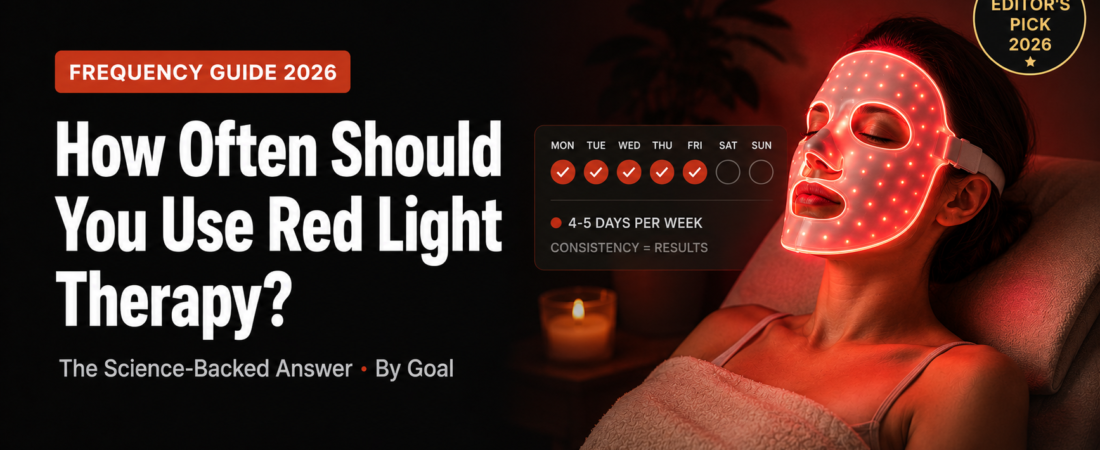
One of the most common questions from people who’ve just bought their first red light therapy device is also one of the most important: how often should I actually use this?
The answer you’ll get from most device brands is a version of “daily or as often as possible.” That answer is incomplete — and in some cases, it’s wrong. Red light therapy follows a biological principle called the biphasic dose response, which means that more is not always better. The right frequency depends on your goal, your device, and where you are in your protocol.
This guide gives you the complete, evidence-based answer — by application, by phase of your protocol, and with a practical schedule you can follow starting today.
Table of Contents
Why Frequency Matters More Than Most People Think
Frequency — how many sessions you do per week — is the variable that determines whether red light therapy works for you at all. Not the brand of device. Not the number of LEDs. Not even the price.
A $500 mask used twice a week for six weeks will be outperformed by a $200 mask used five times a week for twelve weeks every single time. The research is unambiguous on this point: benefits accrue through regular, repeated cellular stimulation over weeks and months. Collagen remodeling is a biological process that cannot be rushed by one marathon session. Hair follicles respond to cumulative light dose delivered consistently over 16–26 weeks. Muscle recovery accelerates when light therapy is applied regularly, not sporadically.
Benefits often accrue after 4–8 weeks of consistent use. Think of red light therapy as an exercise programme for your cells — regular sessions produce the best results.
The flip side is equally important: too little frequency produces no meaningful results. Doing one session a week and wondering why nothing is happening after two weeks is a common frustration that has more to do with protocol than technology.
The Biphasic Dose Response: Why More Isn’t Always Better
Before building your frequency protocol, you need to understand the most misunderstood concept in red light therapy: the biphasic dose response.
Using a red light therapy mask for too long or too often can reduce its effectiveness and cause mild side effects including temporary redness, dryness, or irritation. This happens because of the biphasic dose response — a cellular phenomenon where excessive light exposure diminishes rather than amplifies beneficial stimulation.
Think of it like watering a plant. The right amount helps it grow. Too much, and you drown the roots. At low, controlled red light therapy doses, a beneficial cellular activity will be elicited. But push past the sweet spot and you may slide into diminished efficacy at higher doses as the organism gets used to the stimulus, to straight-out detrimental outcomes.
The clinical threshold matters here. Between 3–50 J/cm², you’re in the zone where mitochondria respond optimally. Above 60–80 J/cm², the biphasic dose response kicks in — benefits diminish, and at extreme doses above 100 J/cm², inhibitory effects can actually make things worse.
What this means practically:
Longer sessions don’t automatically produce better results
Daily use is not inherently superior to 4–5x per week
If you’re not seeing results after increasing frequency, decreasing it may actually help
Session length and frequency interact — a shorter daily session may be preferable to a longer session every other day
The Two Phases Every Protocol Has
Every evidence-based red light therapy protocol has two distinct phases with different frequency requirements.
Phase 1 — Intensive Phase (Weeks 1–8)
This is when you’re building the cellular foundation. Collagen remodeling, hair follicle stimulation, and tissue repair all require initial loading — a period of higher-frequency exposure to establish the biological changes you’re after.
3–5 sessions weekly represents the baseline effective frequency providing regular stimulation with adequate recovery — suitable for most applications including skin, pain, recovery, and wellness.
During this phase: 3–5 sessions per week, following the session length recommended by your specific device. Most FDA-cleared face masks recommend 10 minutes per session. Some (like the Solawave Wrinkle Retreat Pro) are engineered for 3-minute sessions at higher frequency.
Phase 2 — Maintenance Phase (Week 9 onwards)
Once you’ve achieved your initial results, you can reduce frequency to sustain them. The biology has already changed — you’re now maintaining the collagen network, follicle stimulation, or tissue health you’ve built.
Skin rejuvenation: Many dermatologists recommend 3–5 sessions per week for 4–6 weeks when targeting skin concerns like wrinkles or acne, followed by 1–2 sessions per week for maintenance.
During this phase: 1–3 sessions per week is typically sufficient for most applications. Some users maintain 3–4x per week indefinitely as part of their wellness routine.
Frequency by Goal: The Evidence-Based Protocols
Red Light Therapy Frequency Guide: Protocols by Goal
Evidence-based frequency recommendations for every application — intensive and maintenance phases.
⚠️
The Biphasic Dose Response — More Is Not Always Better
Red light therapy follows an inverted-U dose curve: low-to-moderate exposure stimulates cellular function; excessive exposure inhibits it. If results plateau or regress after increasing frequency, reducing your sessions is the correct response — not increasing them further. Always follow your device’s recommended session length.
Frequency by goal — intensive & maintenance
Goal
Intensive Phase
Frequency
Session Length
Duration
Maintenance
✨Skin Anti-Aging
Weeks 1–12
4–5x / week
3–10 min
8–12 weeks
1–3x / week
🫧Acne Treatment
Weeks 1–8
5x / week
3–10 min
4–8 weeks
2–3x / week
💇Hair Loss
Weeks 1–26+
3–5x / week
15–25 min
16–26+ weeks
3x / week ongoing
💪Muscle Recovery
Ongoing
4–6x / week
10–15 min
Continuous
3–4x / week
🦵Joint Pain
Weeks 1–2
Daily
10–20 min
2 weeks; then taper
3–4x / week
😴Sleep Improvement
Week 1–2
Daily (evening)
10–15 min
7–14 days
5x / week evening
🩹Post-Procedure Recovery
Week 1–2
Daily
5–10 min
Until healed
N/A (goal-based)
🔬General Wellness
Weeks 1–8
3–4x / week
10–20 min
8 weeks
2–3x / week
Sample weekly schedules by goal
✨Skin Anti-Aging (Face Mask)
4–5x per week
10 min session · clean bare skin · serums after
M
T
W
T
F
S
S
Rest Wednesday and Sunday. Results visible at 4–6 weeks; collagen changes at 8–12 weeks.
💪Muscle Recovery (Body Panel)
4–6x per week
10–15 min post-workout · treated muscle groups
M
T
W
T
F
S
S
Apply post-workout to worked areas. Rest day sessions support tissue maintenance.
💇Hair Loss (Scalp Device)
3–4x per week
15–25 min · every other day pattern
M
T
W
T
F
S
S
Every-other-day pattern most common in clinical trials. Minimum 16 weeks before assessing results.
😴Sleep Improvement (Evening)
Daily → 5x per week
10–15 min · 30–90 min before bed
M
T
W
T
F
S
S
Daily for first 2 weeks; maintain 5x/week. Results typically felt within 7–14 days.
🦵Joint Pain (Panel / Wrap)
Daily → 3–4x / week
10–20 min per area · 6–12 inch distance
M
T
W
T
F
S
S
Daily for weeks 1–2 during acute phase; taper to 3–4x/week from week 3 onward.
🧘General Wellness
3–4x per week
10–20 min · face or body as preferred
M
T
W
T
F
S
S
Every-other-day works well. Sustainable long-term and well within the therapeutic window.
Ready to start your protocol? See our top-rated devices at every price point — all with verified ASINs and FDA clearance.
Recommended frequency: 3–5 sessions per week Intensive phase: 8–12 weeks Maintenance: 1–3 sessions per week
For skin rejuvenation, frequent sessions tend to deliver the best results because visible changes happen through a gradual collagen remodeling and skin cell renewal process. Clinical LED studies using repeated treatment courses over multiple weeks have shown increased collagen production, reduced collagen-degrading enzymes, and measurable improvements in wrinkle depth, texture, and elasticity over time, which supports a cadence of 3 to 5 sessions per week as a strong baseline for cumulative skin-focused results.
The landmark controlled trial on skin rejuvenation enrolled 136 volunteers and delivered treatment twice weekly for a total of 30 sessions over several months. Participants receiving light therapy had statistically significant improvements in skin complexion, fine wrinkles, and collagen density. Twice weekly is the conservative clinical floor — 4–5x per week produces results faster for most users.
What to expect:
Weeks 1–2: Subtle improvements in radiance and hydration
Weeks 3–6: Visible texture improvement, skin tone begins to even
Weeks 7–12: Measurable fine line reduction, firming effects
Month 3+: Continued collagen remodeling, compounding results
Acne Treatment
Recommended frequency: 3–5 sessions per week (red + blue light) Intensive phase: 4–8 weeks Maintenance: 2–3 sessions per week
For active acne, some protocols call for daily sessions during flare-ups, particularly with blue light (415nm) which targets acne-causing bacteria. A small controlled trial on individuals with psoriasis used 20-minute sessions twice weekly with at least 48 hours between treatments, showing significant improvement after 4–5 weeks. For at-home users with mild to moderate acne, 3–5x per week with a device that includes both red and blue LEDs is the evidence-aligned starting point.
Hair Loss (Androgenic Alopecia)
Recommended frequency: 3–5 sessions per week Minimum timeline: 16–26 weeks before assessing efficacy Maintenance: 3x per week ongoing
This is the application with the longest required timeline. Hair growth protocols typically use 3–5 sessions weekly for 16–26+ weeks minimum before assessing efficacy given the slow hair growth timeline. Clinical trials demonstrating hair benefits predominantly use 3x weekly, with every-other-day patterns being common.
Hair loss is also the application where stopping treatment entirely leads to regression. Unlike collagen, which maintains some structural permanence once formed, hair follicle stimulation requires ongoing maintenance sessions to sustain results. Plan for a long-term commitment if hair is your primary goal.
Muscle Recovery and Athletic Performance
Recommended frequency: 4–6 sessions per week (can include pre-workout) Timing: Pre-workout (experimental) and/or post-workout (well-supported) Maintenance: 3–4x per week
Rest day sessions support general tissue maintenance and may accelerate recovery from accumulated training stress. The high frequency proves sustainable for athletes given recovery and performance priorities justify the time investment, while recreational users may find 3–4x weekly balances benefits with practical constraints.
Pre-workout red light therapy is more experimental — some athletes report performance benefits while the research remains mixed. Post-workout NIR application to trained muscle groups has stronger clinical support for reducing soreness and accelerating strength return. For recreational users, 3–4x per week is realistic and evidence-aligned. For serious athletes, daily use targeting worked muscle groups is a common and well-tolerated protocol.
Joint Pain and Inflammation
Recommended frequency: 3–5 sessions per week Intensive phase: 6–10 weeks Maintenance: 2–3 sessions per week
A 2025 study found that 3 to 4 sessions per week over 10+ weeks produced strong outcomes for pain relief and function while avoiding excessive energy delivery.
For chronic joint conditions like rheumatoid arthritis or knee osteoarthritis, consistency over at least 6–10 weeks is required before meaningful pain relief assessments. Acute injuries may respond within 2 weeks of daily sessions.
Muscle soreness, joint pain, or inflammation from chronic skin conditions may benefit from daily treatments for the first 2 weeks, then tapering off to 2–3 times per week for maintenance.
Sleep Improvement
Recommended frequency: Daily, 30–90 minutes before bed Timeline: 1–2 weeks for initial improvement Maintenance: 3–5x per week ongoing
Evening red light exposure supports natural melatonin production and circadian rhythm regulation. Unlike other applications, sleep benefits are often felt within days — not weeks — because the mechanism (light-dark signaling) is more immediate than cellular remodeling processes. Users consistently report improved sleep onset within 7–14 days of consistent evening sessions.
Wound Healing and Post-Procedure Recovery
Recommended frequency: Daily to start, reducing as healing progresses Timeline: Acute phase 1–2 weeks daily; then taper Maintenance: Not applicable (goal-based, not ongoing)
For post-procedure recovery (post-laser, post-peel, post-microneedling), dermatologists typically recommend daily sessions for the first week to reduce inflammation and support healing, then tapering to 3x per week as the tissue recovers.
How Long Should Each Session Be?
Session length is the other half of the dose equation. Frequency and session length together determine your total weekly light dose.
Recommended Session Length by Device Type
Always follow your device’s protocol — session length is calibrated to its specific irradiance output.
Device Type
Recommended Session
Notes
LED Face Mask (premium)
10 minutes
Most auto shut-off at 10 min — hands-free
Solawave Wrinkle Retreat Pro Fastest
3 minutes
High irradiance (65 mW/cm²) compensates for shorter time
Handheld Wand
3–5 min per zone
Must move device actively across skin
Body Panel (mid-range)
10–20 min per area
At 6–12 inch distance from skin
Body Panel (high-powered)
10–15 min per area
Shorter sessions due to higher irradiance output
Targeted Wrap / Pad
15–20 minutes
Per manufacturer protocol — direct contact
LED Face Mask (premium)10 min
Most auto shut-off at 10 min — hands-free use.
Solawave Wrinkle Retreat Pro ⚡ Fastest3 min
High irradiance (65 mW/cm²) compensates for shorter session time.
Handheld Wand3–5 min / zone
Must move device actively across skin surface.
Body Panel (mid-range)10–20 min / area
At 6–12 inch distance from the skin.
Body Panel (high-powered)10–15 min / area
Shorter sessions due to higher irradiance output.
Targeted Wrap / Pad15–20 min
Per manufacturer protocol — direct skin contact.
Most experts recommend use in the range of 5–30 minutes per day. More is not always better — this is known as the biphasic dose response, with research showing that lower usage may actually be more beneficial than overuse.
The key rule: follow your device’s recommended session length, not your intuition. Device manufacturers calibrate their recommended session times around their specific irradiance output to keep users within the therapeutic window. A device designed for 10-minute sessions was not designed to be used for 20-minute sessions.
Can You Use Red Light Therapy Every Day?
Daily use is not only safe but often recommended during the initial loading phase. There is no credible evidence that daily therapeutic red light exposure causes harm. The light used in red light therapy does not damage DNA, does not burn tissue, and does not produce the cumulative adverse effects associated with UV exposure. The main consideration with daily use is session length and power output from your device. Higher-powered devices may require shorter sessions to deliver the appropriate dose.
So daily use is safe — but is it optimal? That depends on your goal and your device.
For skin anti-aging with a face mask, daily use at the manufacturer’s recommended session length is safe and may accelerate initial results. However, 5x per week produces results nearly as fast as 7x per week in most clinical protocols — and gives you two rest days that reduce the risk of irritation from extended contact.
For muscle recovery, daily post-workout sessions targeting worked muscle groups are well-tolerated and supported by clinical evidence.
For hair loss, daily use is more common in commercial cap and helmet protocols — the lower irradiance of these devices at scalp contact makes daily use appropriate.
For joint pain, daily sessions are appropriate during acute flare-ups. For chronic management, 3–5x per week is the maintenance sweet spot.
Morning vs Evening: Does Timing Matter?
Timing is secondary to consistency — the best time is the time you’ll actually do it every day. That said, there are evidence-informed preferences for specific applications:
Morning sessions work well for:
Energy and circulation — red light may support mitochondrial ATP production that carries over into the day
Face anti-aging — clean skin post-sleep, apply serums afterward
Pre-workout conditioning (experimental)
Evening sessions work well for:
Sleep improvement — red light 30–90 minutes before bed may support melatonin production
Post-workout muscle recovery — apply NIR to trained areas before unwinding
Face anti-aging — natural post-cleansing window, nighttime serum absorption enhanced
What the research says: A 2012 study in the Journal of Athletic Training found that red light exposure improved sleep quality and endurance performance in athletes who used it in the evening. For purely cosmetic applications, the evidence doesn’t show a meaningful morning vs. evening difference in outcomes — only in what fits better into your skincare sequence.
Signs You’re Using It Too Much
Lingering redness, warmth, or stinging beyond short, mild, transient changes suggests excess exposure or heat accumulation, especially after frequency creep or closer distance. A progress stall after increasing minutes or daily use, followed by improvement when time/frequency is reduced, aligns with biphasic dose behavior where higher doses inhibit response.
Watch for these signals that your protocol needs scaling back:
Persistent redness beyond 1 hour post-session
Skin dryness or flaking that wasn’t present before
Eye strain or mild headache after sessions
Results plateau or regression after increasing frequency — this is the classic biphasic response signal
Skin sensitivity or irritation at points that weren’t sensitive before
If you notice any of these: reduce session frequency by 1–2 days per week, reduce session length by 2–3 minutes, and allow 5–7 days for tissues to recover before reassessing.
Signs You’re Not Using It Enough
The more common problem is under-use, not over-use. Signs your protocol needs more consistency:
No change after 8 weeks — reassess whether you’re actually hitting 3+ sessions per week
Skipping 3+ days in a row regularly — inconsistent protocols produce inconsistent results
Session gaps of 5–7 days — too much time between sessions allows cellular response to reset
Doing only 1–2 sessions per week — below the evidence-supported minimum for most applications
The honest self-audit: track your sessions for two weeks. Most people who “aren’t seeing results” discover they’re averaging 1–2 sessions per week when they thought they were doing 4–5.
Building Your Personal Protocol
Here’s a practical starting framework based on goal and phase:
For Skin Anti-Aging (Face Mask)
Intensive: 4–5x per week, 10 min sessions, 8–12 weeks
Maintenance: 2–3x per week, 10 min sessions, ongoing
For Acne (Red + Blue Mask)
Intensive: 5x per week during active breakout, 3–10 min sessions
Maintenance: 3x per week, ongoing
For Hair Loss (Scalp Device)
Every other day minimum (3–4x per week), 15–25 min sessions
At least 16 weeks before assessing. Plan for 6+ months ongoing.
For Muscle Recovery (Panel/Wrap)
4–6x per week post-workout targeting worked areas, 10–15 min per area
Maintenance: 3–4x per week ongoing
For Joint Pain (Panel/Wrap)
Daily for first 2 weeks; taper to 3–4x per week from week 3
Assess at 8 weeks; adjust based on response
For Sleep (Evening Sessions)
Daily, 30–90 minutes before bed, 10–15 min face or body session
Results often felt within 7–14 days; maintain 5x per week
Frequently Asked Questions
How many times a week should I use red light therapy?
The evidence-based baseline for most applications is 3–5 sessions per week during the intensive phase (first 8–12 weeks). This applies to skin anti-aging, acne treatment, hair loss, and muscle recovery. For sleep improvement, daily evening sessions produce the fastest results. For joint pain, daily use during acute flare-ups tapering to 3–4x per week for maintenance is the most common clinical protocol. The minimum below which most people see no meaningful results is 2 sessions per week — below that, there simply isn’t enough cumulative light dose to drive measurable cellular change.
Can I use red light therapy every day?
Yes — daily use at the manufacturer’s recommended session length is safe and often recommended during the initial loading phase. Red and near-infrared light at therapeutic wavelengths does not damage DNA, does not burn tissue, and does not produce cumulative adverse effects. However, daily use is not always optimal. Photobiomodulation follows a biphasic dose response — exceeding the therapeutic window can produce diminishing returns or mild irritation. For most face mask protocols, 5x per week produces results nearly as fast as 7x per week while giving your skin two rest days. Follow your device’s recommended session length — don’t extend sessions to compensate for daily use.
How long should each red light therapy session be?
Always follow your specific device’s recommended session length — this is calibrated to its irradiance output to keep you within the therapeutic window. General guidelines: LED face masks typically run 3–10 minutes (Solawave Wrinkle Retreat Pro: 3 min; HigherDOSE and CurrentBody S2: 10 min). Body panels at 6–12 inches typically require 10–20 minutes per area. Handheld wands need 3–5 minutes per treatment zone. Most experts recommend 5–30 minutes maximum per day. Extending sessions beyond your device’s recommendation does not produce proportionally better results and increases the risk of entering the inhibitory range of the biphasic dose response.
How long until I see results from red light therapy?
It depends on the application. Skin radiance and texture: 2–4 weeks with 4–5x weekly use. Fine lines and collagen changes: 8–12 weeks minimum. Sleep improvement: 7–14 days with consistent evening sessions. Muscle recovery acceleration: noticeable within 1–2 weeks of regular post-workout sessions. Joint pain reduction: 2–8 weeks depending on severity. Hair loss: minimum 16 weeks before meaningful assessment. The most common reason people don’t see results is insufficient frequency — averaging 1–2 sessions per week when their goal requires 4–5. Track your sessions honestly for two weeks and compare against the recommended protocol before concluding the technology isn’t working.
What is the biphasic dose response and why does it matter?
The biphasic dose response (also called the Arndt-Schulz Law in photobiomodulation) describes the principle that low-to-moderate doses of red light stimulate cellular function, while excessive doses inhibit it. Think of it like exercise: the right training load builds strength, but overtraining breaks you down. In practice, this means that longer sessions or higher frequency don’t automatically produce better results — and can actually reverse them. The therapeutic window for facial skin applications is roughly 3–50 J/cm² per session. Above 60–80 J/cm², benefits diminish. If you notice results plateau or regress after increasing your frequency or session length, reducing exposure is the correct response.
Is morning or evening better for red light therapy?
The best time is the one you’ll actually do consistently — consistency matters far more than timing for most applications. That said: morning sessions suit energy, circulation, and skin prep; post-session is an ideal window to apply serums before starting your day. Evening sessions (30–90 minutes before bed) are specifically recommended for sleep improvement, as red light exposure in this window may support melatonin production and circadian rhythm signaling. Post-workout evening sessions targeting muscle recovery are also well-timed. For purely cosmetic anti-aging protocols, the research doesn’t show a meaningful morning vs. evening performance difference — choose the slot that integrates most naturally into your existing routine.
Can you overdo red light therapy?
Yes — though it’s less common than under-use. Signs of overuse include: persistent redness or warmth beyond 1 hour post-session, skin dryness or flaking, eye strain or mild headache, and most tellingly, a results plateau or regression after increasing frequency. Overuse doesn’t cause permanent damage at consumer device power levels, but it can temporarily reduce effectiveness and cause mild skin sensitivity. If you notice these signs: reduce frequency by 1–2 days per week, reduce session length by 2–3 minutes, and allow 5–7 days recovery before reassessing. The goal is stimulation, not saturation.
How often should I use red light therapy for maintenance after initial results?
Once you’ve completed your initial intensive phase (typically 8–12 weeks at 3–5x per week) and achieved your target results, maintenance requires significantly less frequency. Skin anti-aging: 1–3 sessions per week sustains collagen levels. Hair loss: ongoing 3x per week — stopping entirely leads to regression over months. Muscle recovery: 3–4x per week around training sessions. Joint pain: 2–3x per week or as needed during flare-ups. Sleep: 3–5 evenings per week. The collagen you’ve built doesn’t disappear immediately if you miss a week — but consistent maintenance at reduced frequency is what prevents gradual regression over months.