INTEO Red Light Therapy Mask Review 2026: Worth $108?
Spread the love
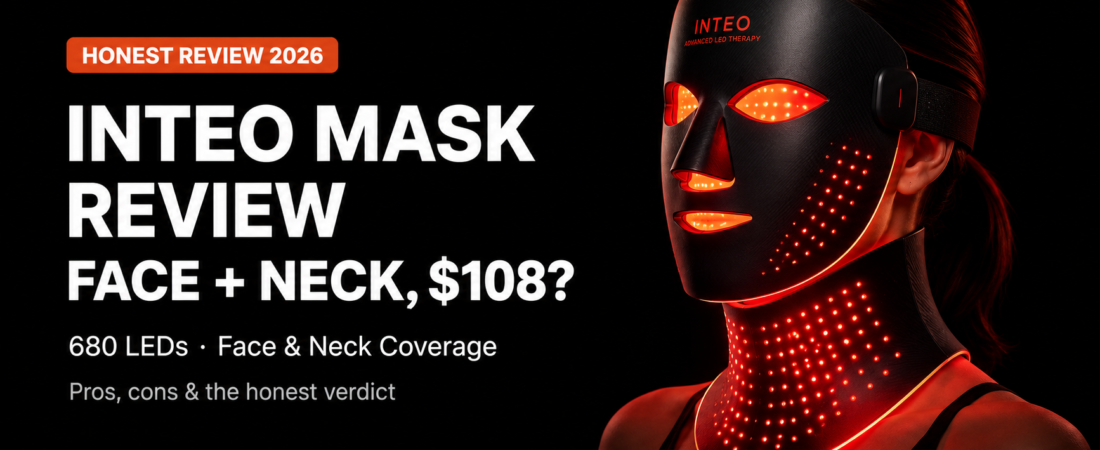
This INTEO red light therapy mask review looks at a face-and-neck combo device that’s built its case almost entirely around one number: 680 LEDs, more than double what most single-piece masks in this price range offer. It currently sits at 4.7 stars across 411 ratings, with the listing showing over 2,000 units bought in the past month — genuine traction for a relatively new brand in a crowded category. At a discounted price typically around $108 (down from a $180 list price, though promotional pricing shifts often, so check the current price before buying), it undercuts most dedicated face-and-neck systems by a wide margin. This review covers what the extra coverage actually buys you, how the technology holds up, who the company behind it actually is, and where the brand’s newness shows — in enough depth to make an informed decision rather than a quick skim.
Table of Contents
What Makes This Product Different
Most LED masks on Amazon treat the face only, full stop. INTEO’s design pairs a full-face mask with a separate wraparound neck piece, each with its own magnetic battery pack that doubles as a display showing remaining session time. That’s the headline differentiator: 680 total LED beads split across two pieces gives you face and neck coverage in a single purchase, instead of buying a face mask and a separate neck device — a combination that would otherwise cost considerably more, as CurrentBody’s separate face and neck products illustrate.
The second differentiator, less obvious from the listing photos, is the independent control system. Rather than a single shared remote governing both pieces at the same intensity and duration, each piece has its own timer and mode selector. That matters more than it sounds — neck skin is thinner and often more sensitive than facial skin, so being able to run a shorter or different-mode session on the neck piece without changing your face settings is a genuinely useful design choice, not just a marketing bullet point.
INTEO positions this as a value play rather than a premium one, and the price point backs that up. What’s less established is the brand itself — INTEO is a newer entrant manufactured by Dongguan Yanxi Technology Co., Ltd, without the kind of independent testing history or long review track record that CurrentBody or even INIA have built up. That doesn’t automatically make it a worse product; it does mean you’re buying with less third-party verification than you’d get from a more established name, a tradeoff worth weighing against the lower price and higher coverage.
The Science Behind It
The mechanism here is the same core photobiomodulation process used across this category: 660nm red light and 850nm near-infrared light are absorbed by mitochondria in skin cells, increasing ATP production. That energy increase triggers a specific cellular cascade — fibroblasts respond to the added ATP by upregulating production of procollagen mRNA, which is then processed into the type I and III collagen fibers that give skin its structure. Simultaneously, the same light exposure reduces pro-inflammatory cytokine signaling, which is part of why redness and irritation tend to calm down before the more dramatic collagen-related changes appear.
Both wavelengths chosen here — 660nm and 850nm — are among the most well-studied in the photobiomodulation literature, which is a genuine point in the product’s favor; INTEO isn’t using an unusual or unproven wavelength combination the way some competitors do with less-validated wavelengths marketed mainly for novelty. The 660nm figure sits close to the 633nm and 630nm figures used in several of the clinical trials referenced across this site’s other reviews, and 850nm is the most commonly cited NIR wavelength for deeper dermal penetration and collagen signaling.
Where the science claim gets thinner is device-specific validation. Like many masks in this price tier, INTEO markets general photobiomodulation research rather than pointing to independent clinical testing of this specific mask — no published irradiance figure (mW/cm²) for this model, no third-party lab verification, and it isn’t listed as FDA-cleared. That’s a meaningful gap relative to devices like CurrentBody’s Series 2, which publishes its irradiance and cites specific clinical trials. It doesn’t mean the underlying light therapy doesn’t work — the wavelength science is sound and well-supported by the broader literature — but treat marketing language about “professional-grade” or “salon-level” results as brand positioning rather than a documented clinical claim specific to this device. A second technical claim worth examining: INTEO’s marketing states 680 LEDs provide “more than 5x the coverage of leading brands.” That’s a coverage claim, not a power claim — more beads spread across a larger surface area (face plus neck) isn’t the same as higher irradiance at any single point, and the two shouldn’t be conflated when comparing this mask to a smaller, more concentrated single-wavelength device.
Design and Usability
At 2.62 lbs combined and roughly 14.8 x 10.4 x 2 inches in its packaged shape, this is a heavier system than a single face mask, which makes sense given it’s really two devices working together. The soft silicone construction and magnetic wireless battery packs (no cords to manage) make it reasonably comfortable to move around in during a session — several buyer accounts specifically mention using it while doing other tasks around the house, which is a real usability win over corded devices that tether you to an outlet.
Setup is straightforward: the magnetic battery packs snap onto each piece, and mode/timer selection happens through the same magnetic unit. This eliminates the fiddly wire-routing that plagues some budget masks, though it does mean you’re managing two separate battery packs rather than one. Each piece has its own separate timer display, which is a genuinely useful design choice over masks with a single shared controller, since you can track face and neck sessions independently and stop one before the other if your skin needs it.
The recurring critique across brand reviews, including for other INTEO models, is that the mask runs on the bulkier side and battery life “could be longer” — worth factoring in if all-day portability or daily recharging fatigue matters to you. One open question worth checking directly on the listing before you buy: confirm whether eye protection is included, since some INTEO mask variants ship with light-blocking eye inserts and others don’t — if it’s not included, plan to keep your eyes closed during sessions as a simple workaround, which is standard practice with LED masks regardless of brand.
Fit is another practical consideration rarely covered in spec sheets. The silicone construction flexes to accommodate different face shapes reasonably well based on available buyer feedback, but the neck piece in particular depends on neck circumference and shape — reviewers with shorter or fuller necks report needing to secure the strap tighter than expected, a minor but real fit consideration for a device marketed as one-size-fits-most.
Results Timeline / What to Expect
There’s nothing unusual about the expected timeline here relative to other red and near-infrared devices in this category, and it’s worth walking through in more detail than the marketing copy provides. Weeks 1–2 are foundation-building — no visible change yet, even though fibroblast activation and the early stages of the ATP-to-collagen cascade described above are already underway beneath the surface. This is the phase where people most often assume the product “isn’t working,” when in fact the biology simply hasn’t caught up to the signal yet.
Brightness and tone improvements are typically the first visible signs for most users, generally in the 4-to-8-week range consistent with the broader photobiomodulation literature — this shows up as a subtle evening of skin tone and a “less tired” look before any structural firmness change is apparent. Firmness changes in the neck and décolletage area — the coverage this mask adds over face-only competitors — generally follow a similar or slightly longer timeline, since neck and chest skin tends to respond a bit more slowly than facial skin in the collagen-remodeling research, likely due to thinner dermal structure and different baseline collagen density in that area.
Beyond week 8, continued use tends to produce incremental rather than dramatic further change — this is standard across the category and isn’t specific to INTEO. As always, individual results depend heavily on consistency: three to five sessions weekly sustained over two months will meaningfully outperform sporadic use, and skipping more than half your planned sessions in a given month noticeably slows the whole timeline. Factors like baseline skin condition, age, sun exposure habits, and whether SPF is used daily alongside the mask all influence how fast (and how far) results go — this device doesn’t operate independently of the rest of your skincare habits.
Who Is This Product Best For
This is a strong fit for anyone specifically wanting neck and décolletage coverage alongside face treatment without buying two separate devices — that combination is genuinely hard to find at this price point, and it solves a real gap in the market rather than being a marketing gimmick. It also suits a budget-conscious buyer who’s comfortable with a newer, less-established brand in exchange for a lower price and more total LED coverage; if you’re the type of shopper who reads reviews carefully and makes an informed tradeoff rather than needing brand-name reassurance, this fits well. It’s a reasonable choice too for someone easing into red light therapy for the first time who wants to try both face and neck treatment before committing to pricier dedicated devices for each area.
It’s a weaker fit for someone who wants the reassurance of an established brand with a longer independent review history and documented customer service reliability — reports of difficulty reaching INTEO’s customer support are worth weighing if after-sales service matters to you, particularly since this is a two-piece electronic device with more that could theoretically go wrong than a single-piece mask. It’s also not the pick for someone whose only concern is the face, where a lighter, simpler single-piece mask like the XSSNVV is easier to handle, better documented, and doesn’t require managing a second battery pack for coverage you won’t use. Finally, anyone prioritizing published clinical data and FDA-cleared status above all else should look toward CurrentBody’s lineup instead, understanding that means paying substantially more.
Comparison vs Competitors
INTEO Face & Neck Mask vs the Competition
How it stacks up against other LED masks at nearby price points.
Against the field, INTEO’s real differentiator is coverage-per-dollar — no other mask at this price includes a dedicated neck piece. The XSSNVV and INIA Glow 4D both beat it on brand track record and documentation for face-only use, and both come from companies with a longer, more established Amazon selling history. The CurrentBody Series 2, at over four times the price, offers the clinical backing and irradiance transparency INTEO doesn’t provide — but you’re paying a significant premium for that assurance, and CurrentBody’s neck coverage is sold as an entirely separate product, meaning the true apples-to-apples comparison for face-plus-neck coverage would need to add that cost in as well, pushing CurrentBody’s effective price for equivalent coverage well past $600.
The Brand Behind It
INTEO is a relatively young entrant in the at-home beauty device space, selling primarily through Amazon and TikTok Shop rather than through an independent retail presence or long-standing dermatology partnerships. The listing for this specific mask names Dongguan Yanxi Technology Co., Ltd as the manufacturer — a contract manufacturer based in Dongguan, China, a region that produces a large share of consumer electronics and beauty devices sold under various Amazon-native brand names. This is a common structure in this product category: many LED mask brands, including some more established ones, source manufacturing from similar regional suppliers, so this alone isn’t a red flag — but it does mean INTEO’s brand equity rests more on its own marketing and customer reviews than on decades of dermatological credibility.
Beyond this face-and-neck mask, INTEO’s broader catalog includes simpler 3-mode portable face masks and at least one microcurrent facial device, suggesting the brand is building out a small but growing at-home beauty device lineup rather than being a single-product operation. Independent, non-affiliate coverage of the brand is limited — most detailed reviews available online come from affiliate review sites or TikTok Shop listings rather than independent dermatology or consumer-testing publications, which is worth knowing if you’re the type of buyer who weighs third-party validation heavily. The brand does offer a 30-day money-back return window, which meaningfully reduces the risk of trying it, though as noted above, some buyers report friction reaching customer support when they need it.
Common Mistakes to Avoid With This Mask
A handful of avoidable mistakes account for most of the disappointed reviews across LED masks in this category generally, and this two-piece design adds a couple of its own. First, running the face and neck pieces on the same schedule regardless of how each area is actually responding — if your neck skin is more sensitive, dial back frequency there independently rather than assuming both pieces need identical treatment. Second, inconsistent charging habits: because you’re managing two separate battery packs, it’s easy to let one drain and skip a session rather than treating both areas that day — set a charging routine for both packs together to avoid this. Third, skipping the “clean skin first” step: applying the mask over makeup, sunscreen, or heavy product residue meaningfully reduces how much light actually reaches the skin, undercutting results regardless of how many LEDs the device has. Fourth, expecting the higher LED count to mean faster results — more coverage area is not the same as a stronger dose at any given point, and rushing the timeline by using it more aggressively than intended doesn’t accelerate the underlying collagen biology, which runs on its own multi-week schedule regardless of session frequency beyond the recommended range.
Pros and Cons
Pros:
Rare face-and-neck combo at a fraction of buying separate devices
680 total LEDs is genuinely high coverage for the price
Independent timer displays and mode control on each piece
Cordless, magnetic battery packs with no cable management
Strong current sales volume and 4.7-star rating suggest real buyer satisfaction
Newer, less-established brand with limited independent testing history
Not listed as FDA-cleared, unlike some premium competitors
No published irradiance (mW/cm²) figure for this specific model
Reported customer service access issues in third-party reviews
Bulkier and heavier than single-piece face masks; battery life feedback is mixed
Confirm eye protection inclusion directly on the listing before buying
Our Verdict
4.1/5. The INTEO mask earns real credit for solving a specific gap — combined face and neck coverage at a price well under buying two devices separately — and the wavelength science behind it is sound and well-supported by the broader photobiomodulation literature. What it hasn’t yet earned is the track record of more established competitors: independent testing, a longer public review history, published irradiance data, and consistent customer service are all thinner here than with CurrentBody or even INIA. If the face-and-neck combination is what you actually need, you’ve read this review carefully enough to accept the brand tradeoff, and you’re comfortable self-managing session frequency between two pieces, this is a genuinely reasonable value pick. If brand reliability and documentation matter more to you than price, the INIA Glow 4D or CurrentBody Series 2 are more thoroughly vetted, face-only alternatives worth the premium.
FAQ
Final Thoughts
The INTEO Red Light Therapy Mask makes its case on math that’s hard to argue with — 680 LEDs, face and neck coverage, and a price under $110 is a genuinely unusual combination in this category, and the underlying wavelength science backing it up is legitimate. The tradeoff is buying into a brand without the track record of the names you’ll see recommended more often on this site, manufactured through a contract supplier structure that’s common in this category but light on independent verification specific to this exact model. If that tradeoff is fine for your budget and your specific goal is treating the neck alongside the face — a combination genuinely hard to find elsewhere at this price — it’s worth considering. For general background on wavelength science before buying any mask, our wavelengths explainer and guide to choosing a red light therapy device cover the fundamentals, and our masks vs panels vs wands comparison is useful if you’re still deciding on device format entirely.
Red light therapy devices are not intended to diagnose, prevent, or treat any medical condition. Individual results may vary. Consult a healthcare provider before starting any new health regimen.